

There’s always that moment when a marketing email gets sent out with complete confidence, yet the results never show up the way they should. Open rates stay low, bounce rates rise, and engagement feels unpredictable.
Many teams face this challenge when email lists have not been verified in months. It’s surprising how quickly outdated or invalid emails can damage a sender’s reputation and slow down outreach efforts.
So, how can brands ensure their messages consistently reach real people?
Modern email verification platforms clean and validate email lists to protect deliverability and maintain trust. The right solution can improve engagement, safeguard data, and support long-term growth. Investing in accurate verification tools is no longer optional; it’s essential for campaign success.
In this blog, we’ll explore the top 7 NeverBounce alternatives and highlight the insights to help you select the best email validation services for your business.
So, let’s get started!
Table of Contents
How Email Verification Platforms Improve Deliverability, and What Features Should You Look For?
Email verification platforms matter because they ensure your emails actually reach real inboxes rather than bounce back. High bounce rates can damage your sender reputation, reduce deliverability, and waste marketing resources.
Verified email lists improve engagement, increase campaign success, and provide accurate analytics. In short, these platforms make your email marketing more effective, efficient, and trustworthy.
What Features Should You Look for in an Email Verification Tool?
When choosing an email verification platform, focus on features that make your email marketing reliable and efficient:
- Real-time verification: Instantly checks if an email is valid as it’s entered.
- Bulk email list cleaning: Verifies large email lists quickly, saving time.
- Catch-all & disposable email detection: Identifies risky or temporary addresses.
- API integration: Connects verification directly with your apps or website.
- Reporting & analytics: Provides insights into list health and email deliverability check results, helping you boost email deliverability.
- GDPR compliance: Ensures user data is handled securely and legally.
Now that we understand why email verification is essential, let’s explore the top 7 email verification tools in 2026 that can help you keep your email lists clean and campaigns effective.
1. EmailVerify.io
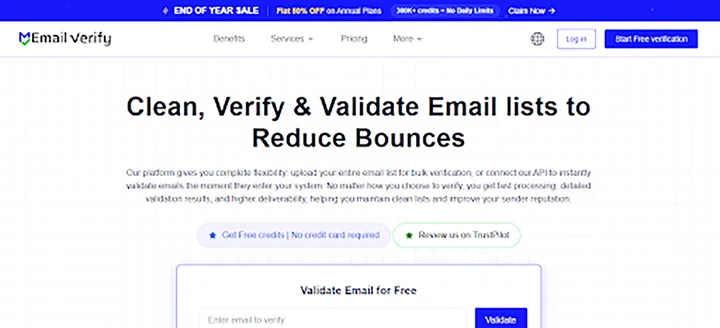
EmailVerify.io is an email verification platform that helps businesses ensure their emails reach valid inboxes, reduce bounce rates, and maintain clean mailing lists. It also provides an API for integration with apps or workflows.
Features of EmailVerify.io:
- Real-Time Email Verification: Confirms email validity instantly during user input.
- Bulk List Cleaning: Allows large datasets to be processed efficiently without errors.
- Catch-All Email Detection: Flags domains that accept all emails to avoid risky addresses.
- Disposable Email Identification: Prevents fake or temporary addresses from entering your campaigns.
- API Integration: Easily connects with CRMs and signup forms for automated verification.
| Pros | Cons |
|---|---|
| Fast and accurate verification | Free credits are limited |
| Detects risky and disposable emails | Some features require upgrades |
| Easy bulk upload | API setup may need technical help |
| Clean and simple dashboard |
Pricing
- Free Plan: 100 monthly credits
- Paid Plans: $20–$120/month (30,000–180,000 credits)
Tired of Low Open Rates? EmailVerify helps you verify email addresses in real time, so your campaigns hit the inbox every time.
2. ZeroBounce
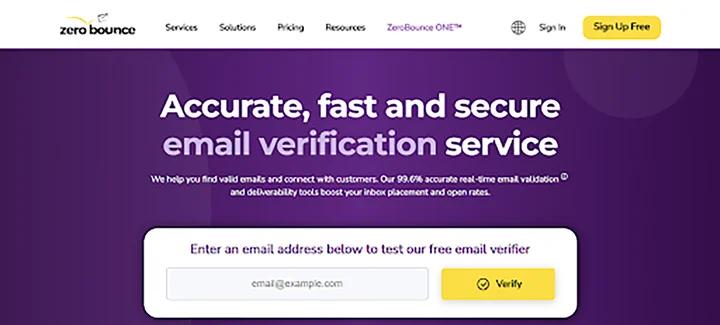
ZeroBounce is an email validation platform designed to improve deliverability by removing invalid, spammy, and risky email addresses from your lists.
Highlighted Features of ZeroBounce:
- Email Scoring & Activity Analysis: Assigns scores based on engagement history and activity trends.
- Spam Trap & Abuse Detection: Protects against harmful or flagged addresses.
- Catch-All Server Detection: Identifies unverifiable domains.
- Append Missing Data: Can enrich emails with first and last names, gender, and location.
- GDPR Compliance: Ensures all data handling is privacy-safe and legal.
| Pros | Cons |
|---|---|
| High verification accuracy | It can be expensive for large volumes |
| Advanced spam trap detection | Activity scoring costs extra |
| Strong data security & GDPR compliant | Dashboard can feel complex |
| API available for integrations |
Pricing
- Free Plan: 100 monthly verifications
- Paid Plans: Pay-as-you-go, starting from $16 for 2,000 verifications
3. BriteVerify
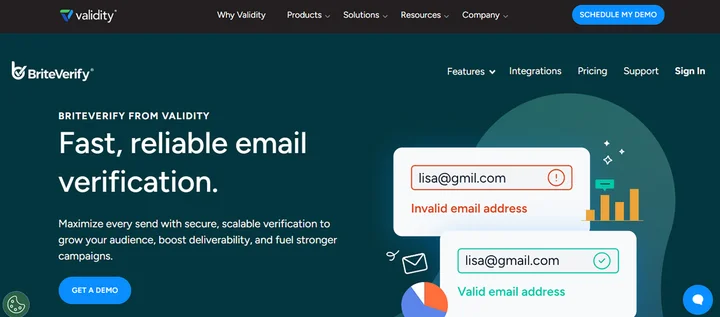
BriteVerify is an email verification platform by Validity that focuses on fast, accurate validation for both real-time and bulk email lists. It helps businesses improve email deliverability and improve email marketing list hygiene.
Features of BriteVerify:
- Syntax, Domain, and Mailbox Checks: Multi-layer validation ensures accurate deliverability.
- Real-Time Inline Verification: Prevents invalid emails from entering forms as users type.
- Drag-and-Drop Bulk Verification: Simplifies list cleaning for non-technical users.
- Marketing Platform Integrations: Works seamlessly with HubSpot, Mailchimp, Salesforce, and more.
- Pay-As-You-Go Model: Users only pay for the verifications they use, making it flexible.
| Pros | Cons |
|---|---|
| Easy-to-use, beginner-friendly interface | Pricing is slightly higher than some alternatives |
| Fast and accurate results | Limited advanced verification features |
| No long-term contracts | Focused mainly on email, not multi-channel validation |
| Integrates with major marketing platforms |
Pricing
- Pay-As-You-Go: Pricing depends on the number of verifications: users pay only for what they use.
4. DemandTools
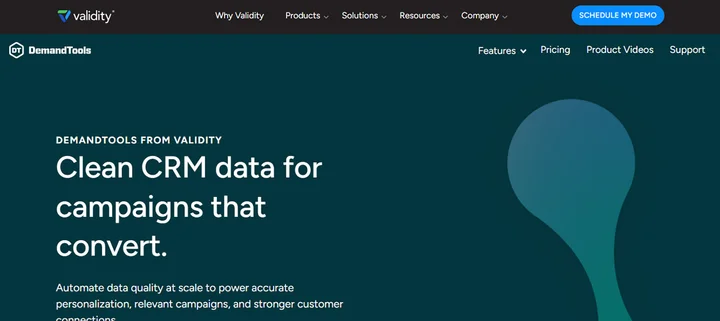
DemandTools is a data-quality and CRM-management platform by Validity that helps businesses clean, verify, and organize their customer data, including email validation, deduplication, and record standardization, especially when managing large CRM databases.
Features of DemandTools include:
- Bulk CRM Email Validation: Cleans email addresses directly inside CRM databases.
- Deduplication and Record Merging: Finds duplicates across leads, contacts, and accounts.
- Data Standardization: Automatically formats and corrects fields for consistent data.
- Automated Cleaning Schedules: Keeps CRM data up-to-date without manual effort
- Import/Export Tools: Maintains relationships and prevents data loss during list updates.
| Pros | Cons |
|---|---|
| Strong CRM focused data cleaning capabilities | More complex to use than simple email verification tools |
| Handles large CRM databases effectively | Requires a paid subscription for full feature access |
| Direct integration with platforms like Salesforce | It can feel overwhelming for small businesses |
| Automates repetitive data tasks | Pricing scales with CRM seats |
Pricing
- Free Plan: Available with limited features
- Subscription:
- $5.50 per CRM license/month for the Elements edition
- $11.00 per CRM license/month for the complete DemandTools platform
5. Hunter.io Email Verification
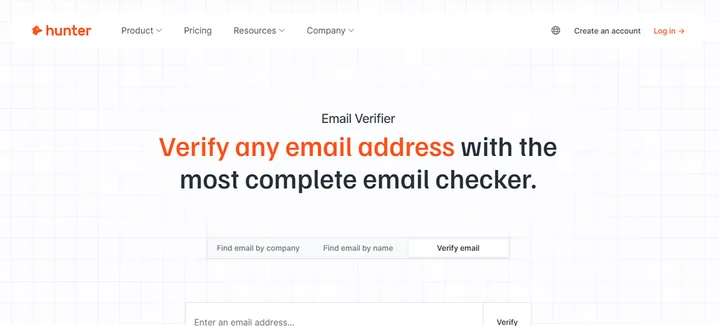
Hunter.io is a popular email verification and email-finding platform that helps you verify email addresses (one by one or in bulk), find professional business email addresses, and clean your email lists to reduce bounce rates.
Features of Hunter.io:
- Email Finder & Domain Search: Locate professional business emails using company domains.
- Multi-Step Verification: Checks syntax, domain, server response, and mailbox existence.
- Bulk List Verification: Cleans large contact lists efficiently.
- API for Outreach Tools: Connects with CRMs, marketing platforms, and custom apps.
- Professional Email Focus: Ideal for B2B campaigns and targeted outreach efforts.
| Pros | Cons |
|---|---|
| Multi-layer checks reduce bounce risk | Few verifications per month |
| handles large lists efficiently | Paid plans can be costly for high-volume use |
| suitable for outreach | less reporting compared to some dedicated tools |
| integrates with workflows and CRMs | personal or obscure domains may be less reliable |
Pricing:
- Free Plan: 50 credits per month
- Starter: $34–$49 per month, 2,000 credits/month
- Growth: $104–$149 per month, 10,000 credits/month
- Scale: $209–$299 per month, 25,000 credits/month
- Enterprise: Custom pricing for higher needs
6. Kickbox
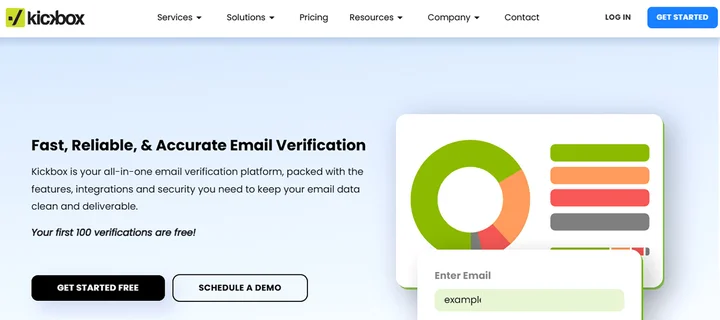
Kickbox is a reliable email verification platform designed to protect deliverability and minimize bounce rates for marketing campaigns of all sizes. It focuses on accuracy, real-time checks, and risk management, making it a strong choice for businesses that rely heavily on email outreach.
Unique Features include:
- Deliverability Scoring: Rates emails for their likelihood of reaching the inbox.
- SMTP Validation: Confirms mailbox existence and the accuracy of server responses.
- Disposable & Role-Based Email Detection: Flags temporary, generic, or role-specific addresses like info@ or admin@.
- Integration with Marketing Platforms: Seamlessly connects with most email service providers.
- Detailed Reporting: Provides insights into list health and verification outcomes.
| Pros | Cons |
|---|---|
| High accuracy with advanced SMTP and role-based checks | Some advanced features require higher-tier plans |
| Real-time verification for forms and signup pages | May need technical setup for API integrations |
| Integration-ready with CRMs and marketing platforms | |
| Transparent reporting and actionable insights |
Pricing:
- Free Plan: 100 verifications (one-time free credits)
- Paid Plans: Pay-as-you-go, $5–$4,000 (500–1,000,000 verifications)
7. QuickEmailVerification
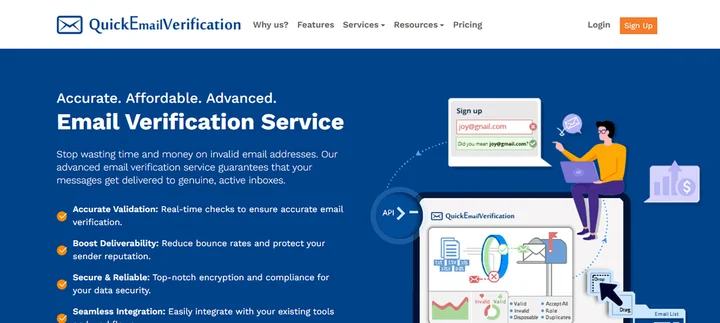
QuickEmailVerification is a high-accuracy email validation platform designed for real-time and bulk verification. It helps businesses detect invalid, risky, or disposable emails to lower bounce rates and protect sender reputation.
Unique Features:
- Advanced SMTP & MX Checks: Confirms domain health and mail server availability.
- Real-Time Verification on Forms: Ensures only valid emails are submitted in signup forms.
- Spam Trap & Abuse Detection: Reduces bounce risk and protects sender reputation.
- Bulk List Processing: Handles thousands of emails quickly with reliable accuracy.
- API Integration for Automation: Supports CRM, marketing platforms, and custom workflows.
| Pros | Cons |
|---|---|
| strong SMTP and domain checks | The interface is simple and lacks some advanced dashboard analytics |
| ideal for large lists | The free plan is limited in the number of daily verifications |
| disposable and spam-trap filtering included | Reports are basic compared to some competitors |
| works well for automation |
Pricing
- Free Plan: 100 verifications per day
- Paid Plans: $4–$4,000 (500–5,000,000 verifications)
Frequently Asked Questions (FAQs)
2. What Makes NeverBounce Alternatives Worth Considering In 2026?
A few key shifts make alternatives more valuable today. Many tools now offer faster verification, deeper risk analysis, stronger integrations, and better accuracy for catch-all domains. These improvements often result in:
- More reliable campaign performance
- Lower verification costs
- Expanded features beyond email validation
This means exploring alternatives can help you match a tool more closely with your current goals and data needs.
3. How Often Should You Verify an Email List?
The ideal frequency depends on how fast your list grows, but most businesses benefit from:
- Verifying new sign-ups in real time
- Cleaning the entire list every 2–3 months
- Running an extra check before major campaigns
Regular verification makes list quality predictable and reduces the risk of deliverability issues.
4. Do Email Verification Tools Store Your Contacts?
No, reputable tools do not permanently store or sell your data. Most platforms:
- Temporarily process your list
- Automatically delete files after verification
- Follow GDPR, CCPA, and other data-privacy standards
This ensures your email data remains protected throughout the process.
5. Which Email Verification Tool Is Best For Large Businesses?
The best option depends on your infrastructure. However, platforms like ZeroBounce, Kickbox, and QuickEmailVerification tend to perform well because they offer:
- High accuracy
- Scalable bulk cleaning
- Advanced risk scoring
- Strong API performance
Enterprise teams often prefer tools with detailed reporting and CRM integrations.
6. Can Email Verification Improve Overall Email Marketing ROI?
Absolutely. Clean lists directly impact revenue because verified emails lead to:
- Higher deliverability
- Better open and click rates
- Lower spam complaints
- Stronger sender reputation over time
In other words, every verified email increases your chances of reaching real customers who can actually convert.
Summary: Pick the Best Email Verification Solution in 2026
A clearer picture now emerges of how reliable email verification tools protect deliverability, reduce bounce rates, and keep your campaigns moving in the right direction. The comparison of top platforms highlights how each one supports different needs, whether you prioritize accuracy, bulk cleaning, or integrations.
This overview helps narrow down options so you can confidently match a tool with your marketing or outreach goals. What really matters is selecting a solution that strengthens long-term list health, supports your growth, and maintains sender reputation.
With the right email verification platform, your campaigns can achieve stronger engagement, more consistent results, and dependable performance every time.
Now the choice is yours: Which email verification tool will power your 2026 projects to success?
Don’t let invalid emails hold back your campaigns. Keep your lists clean and reach every inbox.


