

Every marketer knows the frustration of seeing campaign emails underperform, even when the content is carefully crafted.
A hidden challenge often lurks in the subscriber list: disposable email addresses. These addresses might look functional on the surface, but they create major issues for your data and compromise email marketing compliance.
Millions of users create one-time emails or use temporary email generators to sign up for services without revealing their real identities. These addresses may serve casual purposes, but they create real obstacles for businesses trying to maintain a healthy, engaged email list.
Failing to address them can distort analytics, waste marketing resources, and hurt your sender reputation.
This guide explains how to identify disposable emails, implement effective disposable email filtering, and follow list hygiene best practices to protect your campaigns.
You’ll see changes to strategies on fake email detection, email verification tools, and strategies to prevent disposable email signups, keeping your email marketing efforts focused on genuine, active subscribers.
By the end, you will have a clear roadmap to maintain a clean, reliable email list, reduce bounces, and safeguard the effectiveness of every email sent.
Read on to find out more.
Table of Contents
What Are Disposable Emails?
A disposable email is a temporary address created for short-term use, often just for a single sign-up or to access content. Once the user is finished, they discard the address, and it becomes inactive.
People use disposable email addresses to avoid spam, protect their privacy, and allow people to access websites or services without sharing their real identity.
For marketers, however, disposable accounts create serious challenges. You can’t reach users who check their inboxes, and if these addresses end up on your email list, they can create challenges for your campaigns.
Example:
Services like TempMail allow people to create disposable emails for short-term use, such as signing up for a website or accessing a promotion. It protects user privacy, but these addresses can cause emails to bounce and hurt your campaign metrics.
Identifying and filtering TempMail accounts helps keep your email list clean and reliable.
To see why these emails matter for your campaigns, let’s break down their main benefits and drawbacks:
| Pros Of Disposable Emails | Cons Of Disposable Emails |
|---|---|
| Help protect personal privacy when signing up for services | Can add fake email addresses to marketing lists, distorting analytics and engagement metrics |
| Reduce the number of unwanted marketing emails landing in someone’s main inbox | Increase the risk of hitting spam trap emails, harming the sender's reputation |
| Provide a quick way to try out websites or services without committing long-term | Often leads to higher bounce rates, lowering overall campaign effectiveness |
| Useful for testing new services or promotions without using a personal email | Make it more difficult to stay compliant with email marketing rules, including GDPR requirements |
After seeing how disposable emails function, it’s important to consider the problems they can cause for your campaigns.
Why Are Disposable Emails Harmful for Your Email Deliverability?
Spotting disposable emails on your list is essential for keeping your campaigns running smoothly. These temporary or throwaway addresses often sneak in unnoticed, but there are clear signs and tools you can use to catch them before they affect your deliverability.
When you know what to look for, you can filter out fake or inactive addresses and focus on subscribers who genuinely engage with your content.
To see exactly how disposable emails affect your deliverability, let’s break down the main ways they can impact your campaigns:
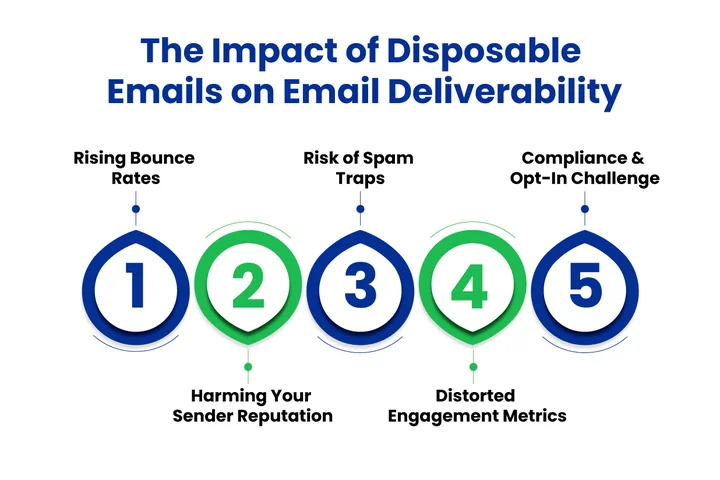
Increased Bounce Rates
Many disposable emails come from domains created specifically for temporary use. Checking the domain of incoming addresses can help you flag accounts that are likely disposable.
Example: If you send a campaign to 1,000 subscribers and 100 of the addresses are disposable, about 10% of your emails could bounce, making it harder for the rest of your messages to reach the inbox.
Damage to Sender Reputation
Email providers monitor metrics like bounce rates and engagement to judge whether your emails are trustworthy. Repeated interactions with disposable emails can lower your sender reputation and make providers less likely to deliver your campaigns.
Example: If Gmail detects repeated bounces or low engagement from your emails, it may start sending your future campaigns straight to spam folders, affecting your ability to reach real subscribers.
Increased Risk of Spam Traps
Some disposable email addresses are actually spam traps, accounts set up to catch senders who don’t maintain clean lists. Hitting these traps can lead to serious deliverability issues or even cause getting blocked by major providers.
Example: Sending a newsletter to a disposable email that acts as a spam trap could trigger your email address to be blocked by major providers, limiting the reach of all your campaigns.
Skewed Engagement Metrics
Inactive disposable emails lower your open and click-through rates, giving you a false picture of how your campaigns perform. Low engagement can influence future inbox placement and make it harder to optimize your email strategy.
Example: You might think your latest promotion wasn’t engaging, but a significant portion of your list could be temporary emails that never interact with your content.
Complications with Compliance and Opt-Ins
Disposable emails are often unverified, which can create compliance risks under regulations like GDPR in Europe and CCPA in California. Sending marketing messages to addresses that haven’t explicitly consented can expose businesses to legal issues or fines.
Example: Collecting newsletter signups from disposable emails without proper verification may violate GDPR and CCPA rules if personal data is mishandled.
Stop Disposable Emails From Sabotaging Your Campaigns and Harming Your Sender Reputation.
How Can You Identify Disposable Emails?
Spotting disposable emails on your list is essential for keeping your campaigns effective. These temporary or throwaway addresses can slip in unnoticed, but there are clear signs and tools you can use to identify them before they hurt your deliverability.
By knowing what to look for, you can filter out fake or inactive addresses and focus on real subscribers who actually engage with your content.
Here’s how you can identify disposable emails:
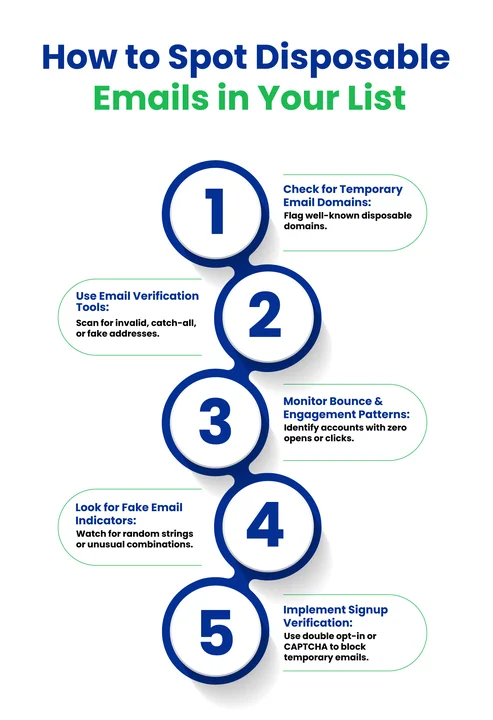
Disposable Email Domains
Look for email addresses that come from known domains that are specifically designed for temporary use. Checking the domain of incoming addresses can help flag accounts that are likely disposable.
Example: Addresses ending with domains like TempMail, 10MinuteMail, or GuerrillaMail are almost always temporary and unverified; engage with your campaigns.
Use Email Verification Tools
Email verification tools can automatically scan your list and detect disposable or fake emails. These tools check syntax, domain validity, and whether an address is known to be temporary.
Example: Using a trusted tool like EmailVerify.io can quickly identify addresses that are invalid, catch-all, no-reply, or do not email, helping you spot disposable or problematic addresses and clean your list before sending a campaign.
Monitor Bounce and Engagement Patterns
Accounts that never open emails, click links, or frequently bounce are often disposable. Watching these patterns over time can help you identify suspicious addresses.
Example: If a group of subscribers consistently shows zero engagement across multiple campaigns, it may be time to investigate or verify your list.
Check for Fake Email Indicators
Some disposable emails use random strings or unusual combinations of letters and numbers. These can be a red flag when reviewing new signups.
Example: Addresses like [email protected] or [email protected] are typical of one-time email generators.
Implement Signup Verification Methods
Requiring confirmation emails or CAPTCHA during signup can reduce disposable email entries. This ensures that subscribers genuinely want to join your list.
Example: Double opt-in processes, where users must click a verification link, can prevent most temporary addresses from being added.
With these methods to identify disposable emails, it’s time to look at how to filter and prevent them so your campaigns reach real, engaged subscribers.
How Can You Filter and Prevent Disposable Emails From Your Email List?
Even after identifying disposable emails, the work isn’t over. Filtering and preventing them from entering your list ensures your campaigns reach real, engaged subscribers and protect your sender reputation.
Here are some practical strategies you can implement:
Use Real-Time Verification
Implementing real-time email verification during signup helps prevent disposable addresses from entering your list. Tools like EmailVerify.io can instantly block invalid, catch-all, no-reply, and temporary addresses before they’re added.
Block Disposable Email Domains
Maintaining a list of known disposable email domains and blocking them during signup reduces the number of fake emails entering your system. Updating this list ensures that new temporary services are also prevented from entering your list, keeping it clean and reliable.
Enable Double Opt-In
A double opt-in requires subscribers to confirm their email via a verification link, preventing most disposable or fake addresses from completing the signup process. If a user signs up with a temporary email and doesn’t click the confirmation link, they won’t enter your active list.
Monitor and Clean Your List Regularly
Even with preventive measures, some disposable emails can slip through. Reviewing bounce rates, engagement metrics, and flagged addresses regularly helps maintain a healthy list.
Running a monthly cleanup using an email verification tool can remove inactive or disposable accounts that haven’t engaged with your content.
Educate Your Team and Subscribers
Signup forms should guide users toward providing valid emails, and internal teams should understand the risks of disposable emails. Adding a note like “Please provide a valid email to receive updates” and training your marketing team to spot suspicious signups can reduce disposable email entries.
A well-maintained list improves deliverability and also ensures your campaigns reach subscribers who genuinely want to hear from you.
Don’t Let Fake Signups Drag Down Your Metrics
Top 8 Best Practices for Email List Hygiene
Maintaining a clean email list is essential for keeping your campaigns effective, protecting your sender reputation, and engaging real subscribers. Even after preventing disposable emails and using filtering techniques, ongoing attention to your list ensures your messages reach people who genuinely want to hear from you.
The following 8 practices will help you maintain a healthy, reliable email list:
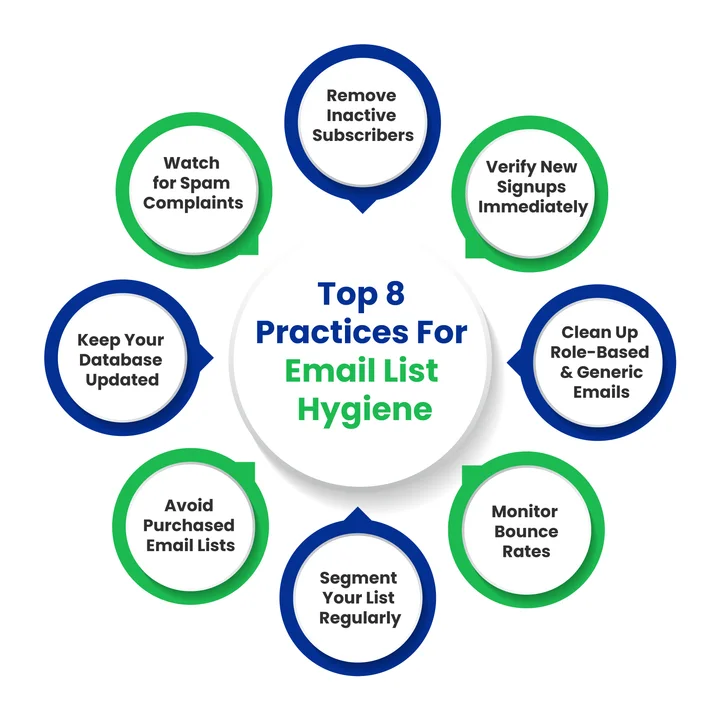
1. Regularly Remove Inactive Subscribers
Subscribers who haven’t opened or clicked your emails over several months can drag down your engagement metrics. Removing these inactive users improves open rates, click-through rates, and overall deliverability.
It is a good idea to segment users who haven’t engaged in 6–12 months and send them a re-engagement email before removing them entirely. This approach keeps your list focused on real, interested subscribers while supporting email list cleaning and bounce rate reduction.
2. Verify New Signups Immediately
Using email verification tools during signup prevents disposable email addresses, fake email addresses, and one-time emails from entering your list. These tools check whether an address is valid, the domain is active, or the email comes from a temporary email generator or a known disposable email domain.
Blocking fake signups instantly helps with spam prevention techniques and ensures that your campaigns reach real users rather than throwaway accounts.
3. Generic Email Addresses
Remove role-based addresses like email, support, and admin, as well as generic or temporary addresses, from your list.
These types of addresses often have low engagement and can inflate bounce rates or trigger spam traps, making it harder for your messages to reach real subscribers. Regularly reviewing and removing these accounts helps you maintain a healthier, more responsive email list.
4. Monitor Bounce Rates
High bounce rates are a strong indicator that your list contains temporary emails, fake addresses, or invalid domains. Keeping track of bounces allows you to remove problematic addresses quickly, protecting your sender’s reputation.
Combining this with disposable email filtering ensures that your campaigns consistently reach legitimate subscribers.
5. Segment Your List Regularly
Segmenting your list according to engagement, signup source, or email domain type makes it easier to spot suspicious patterns. This practice also improves targeting and personalization, which boosts engagement.
Smart email list management can work alongside disposable email detection tools to isolate potentially harmful addresses before they affect your campaigns.
6. Avoid Purchasing Email Lists
Purchased lists often contain outdated, invalid, or disposable emails. Sending campaigns to these lists creates a high risk of hitting spam traps, damage your sender reputation, and put you at risk of non-compliance.
When you build your list organically, it ensures that subscribers are genuinely interested in your content, helps maintain your sender reputation while staying compliant with GDPR and CCPA.
7. Keep Your Database Updated
Encouraging subscribers to update their contact information regularly helps reduce hard bounces and ensures your list contains active users.
Use feedback loops or preference centers options can help you identify throwaway emails or outdated addresses, maintaining a cleaner, more responsive list.
8. Watch for Spam Complaints
Monitoring spam complaints is critical to avoid negatively impact deliverability. Monitoring complaints allows you to remove problematic addresses promptly. Repeated complaints may indicate fake emails, temporary accounts, or disengaged subscribers on your list.
This step is also part of broader spam prevention techniques to protect your sender’s reputation.
A Complete Checklist on Managing Disposable Emails
Keeping your email list clean and free of disposable addresses is essential for maintaining deliverability, engagement, and overall campaign performance. Use this checklist as a practical guide to manage, monitor, and optimize your subscriber list, ensuring your messages reach real, interested users and your sender reputation stays strong.
- Use real-time email verification during signup.
- Block known disposable email domains.
- Implement double opt-in for new subscribers.
- Monitor bounce rates and remove inactive subscribers.
- Flag email addresses with unusual patterns (random strings, odd combinations).
- Clean role-based or generic emails (info@, admin@, support@).
- Segment your list by engagement or signup source.
- Avoid purchased or third-party email lists.
- Track engagement metrics (open, click-through, and bounce rates).
- Audit new signups for temporary or fake emails.
- Train your team and guide subscribers on providing valid emails.
With these steps in place, it’s easier to protect your campaigns, but let’s look at some actual examples of what happens when disposable emails are ignored.
Case Studies: What Happens When Disposable Emails Go Unchecked?
Without identifying and filtering disposable emails, many businesses don’t realize how much disposable emails can affect their results until the damage shows up in metrics. Seeing examples makes it way more manageable. From planning and designing to development and launch, each stage plays a role in creating an app that keeps users coming back.
Here’s how businesses handle similar situations:
Case Study 1: A Retail Brand Struggled With Sudden Bounce Spikes
A fashion retailer noticed a sharp increase in hard bounces during seasonal promotions. After running their list through an email verification tool, they discovered that a large portion of new signups came from one-time email generators used to claim discount codes.
Outcome: After removing these addresses, their subscriber count but delivered zero engagement. Once removed, the brand saw bounce rates drop and inbox placement improve across Gmail and Outlook.
This cleanup also prevented the risk of hitting spam traps disguised as disposable addresses.
Case Study 2: A SaaS Startup Faced Poor Onboarding Activation Rates
A SaaS company launched a free-trial onboarding campaign, but activation emails weren’t delivering the expected results. During an audit, the team found that many trial users had registered using disposable addresses to test the platform without providing real information.
Because these emails couldn’t receive onboarding messages, activation numbers fell, and churn increased.
Outcome: After implementing real-time verification and blocking disposable email domains, the startup saw valid user signups increase by 25% and overall trial-to-customer conversions improve.
Case Study 3: An Ecommerce Store Triggered a Deliverability Warning
An online store relying heavily on weekly newsletters noticed that its open rates were steadily falling. Their email service provider later flagged their account for low engagement and repeated sends to inactive or invalid addresses.
The deeper issue showed that several thousand subscribers were added through a previous giveaway campaign, many of them using temporary or throwaway email accounts created only to enter the contest.
Outcome: After removing these disposable addresses and improving list hygiene practices, open rates climbed back up, and their ESP lifted the deliverability warning.
Wrapping Up
Disposable emails can quietly sabotage carefully planned campaigns. They inflate bounce rates, distort engagement metrics, and create compliance risks under GDPR and CCPA. One-time temporary emails or throwaway email accounts might seem harmless, but they can seriously affect your deliverability and sender reputation.
By spotting disposable emails, using email verification tools, filtering throwaway addresses, and following list hygiene best practices, you can keep your subscriber base clean and engaged. Filtering out fake accounts and regularly cleaning your list ensures that your campaigns reach people who actually want your content.
Keep this guide as your roadmap: check your signups, clean your list, and prevent disposable email entries. Doing so improves engagement, reduces bounces, and ensures every email reaches the people who matter most.
Frequently Asked Questions (FAQs) on Disposable Emails
2. How Do You Detect Disposable Emails in Your List?
You can identify disposable emails by looking for unusual domains, random strings, or signs of low engagement. Email verification tools help flag temporary addresses before they affect your campaigns. Regularly monitoring bounce rates and engagement patterns also helps spot one-time or throwaway emails.
3. Why Should You Block Disposable Email Addresses?
Disposable emails inflate your subscriber list without providing real engagement, making it harder to gauge campaign performance. They increase bounce rates and can trigger spam traps, damaging your campaign performance. Blocking these addresses ensures your emails reach subscribers who genuinely want to hear from you.
4. How Often Should You Clean an Email List to Remove Temporary or Fake Addresses?
Cleaning your email list should happen at least once a month to maintain accuracy and engagement. Regular list hygiene removes inactive, disposable, or fake emails that reduce deliverability. A consistent cleaning schedule also helps optimize campaign performance and inbox placement.
5. How Do Temporary Emails Affect Your Engagement Metrics and Campaign Reporting?
Temporary emails rarely open or interact with your content, lowering open and click-through rates. This can give a false impression that your campaigns are underperforming. Over time, these inactive addresses make it harder to verify content and maintain a healthy sender reputation.
Turn Your Email List Into a High-Performing Asset


