

Better inbox placement, lower bounce rates, and a stronger sender reputation all start with tidy email hygiene. When engagement rises, spam traps are avoided, and messages get delivered better, and you know your message isn’t wasted.
It means keeping your contacts active, valid, and engaged. When your list is in good shape, your emails land where they should, your deliverability score improves, and your overall reputation as a sender stays healthy.
Have you ever noticed emails bouncing back or disappearing into spam folders?
That’s a clear sign a list needs attention. A few simple steps to maintain a clean list can make a big difference, helping your message reach the people who actually want to hear from you.
This guide will explain what clean email really means, why it matters for your sender reputation, and how to keep your list in great shape.
Let’s get into it!
Table of Contents
What Does A Clean Email List Mean?
A clean email list means having a list that’s accurate, active, and organized so your emails actually reach the right people. It’s like a well-kept address book: every contact is valid, engaged, and genuinely interested in you.
The following are the traits of a clean email list:
- Valid email addresses: No typos, no outdated domains, no fake accounts.
- Active contacts: People who open, click, and interact with your emails.
- Segmented and organized lists: Contacts grouped by interests, behaviors, or activity levels.
- Low bounce and spam complaints: A list that avoids hard bounces, soft bounces, and spam traps.
When your list meets these standards, it makes your campaigns more meaningful because you’re targeting people who actually want to hear from you.
What Happens If You Don’t Clean Your Email List?
A neglected email list might not look like a problem at first, but the impact builds quietly over time. When your list contains invalid, inactive, or unengaged contacts, it creates a ripple effect that weakens your campaigns and hurts your reputation as a sender.
Here’s what can happen if you don’t keep your email list clean:

1. High Bounce Rates
Emails sent to invalid addresses bounce back immediately. These bounces signal to inbox providers that your list isn’t reliable, which can push future messages toward the spam folder and reduce deliverability.
2. Reduced ROI
A dirty email list directly impacts your return on investment (ROI). Every email sent to inactive, invalid, or “role-based” accounts consumes resources, time, effort, and marketing budget, without generating clicks, conversions, or revenue.
As a result, your campaigns cost the same but deliver less, lowering overall profitability.
3. Damaged Sender Reputation
Frequent bounces, low engagement, and poor list quality make email providers suspicious. A weakened sender reputation means fewer emails reach inboxes, even for contacts who want to hear from you.
4. Lower Engagement Rates
Dirty lists are filled with contacts who don’t open or interact with your emails. When engagement drops, it sends a negative signal to providers and algorithms, which can further hurt deliverability.
5. Increased Spam Complaints
People who no longer recognize or want your emails may mark them as spam. Even a small number of complaints can affect your sender reputation score, making it harder for future campaigns to succeed.
6. Risk of Hitting Spam Traps
Old or purchased email lists often contain spam traps, addresses specifically designed to catch spammers. Sending to these addresses can seriously damage your reputation and make it more difficult for your emails to land in inboxes.
7. Wasted Time and Resources
Every email sent to a dead or disengaged address is time and effort that produces no results. Over time, this drains your marketing resources and slows down your campaign performance.
High Bounce Rates Killing Your Campaign Dreams?
Why Do You Need Clean Emails to Protect Your Sender Reputation?
It’s easy to think that removing inactive contacts shrinks your reach and limits the potential of campaigns in ways you might not always notice. Poor email hygiene can quietly lower engagement, increase complaints, and waste your marketing resources on contacts that don’t interact with your messages.
Here are the reasons why keeping a list in good shape matters:
- Prevents Deliverability Issues
Spam filters and bounce notifications often catch inactive or incorrect email addresses. Maintaining a clean list is a best practice to boost email deliverability, keeping your messages out of spam folders and ensuring they reach the intended inboxes. - Saves Time and Resources
Sending messages to invalid contacts wastes both effort and marketing budget. Cleaning your list ensures every email you send reaches someone who could engage, making your campaigns more efficient and effective. - Improves Engagement Rates
Contacts who are interested and active are more likely to open, click, and interact with your content. Good email hygiene means your emails reach people who care, naturally boosting overall engagement stats. - Protects Your Sender Reputation
Frequent bounces, spam complaints, or inactive contacts can damage your sender reputation. A well-maintained list signals to email providers that you’re a trusted sender, which helps future emails land in the inbox. - Reduces Risk from Spam Traps
Old or purchased email lists often contain spam traps that can hurt your campaigns. Keeping your list clean helps avoid these pitfalls, protecting your send deliverability and your reputation.
What Are The Essential Components of a Clean Email List?
A clean email list is a well-structured, accurate, and organized database that ensures your emails reach the right people.
To build and maintain a healthy email list, it should include the following key elements:
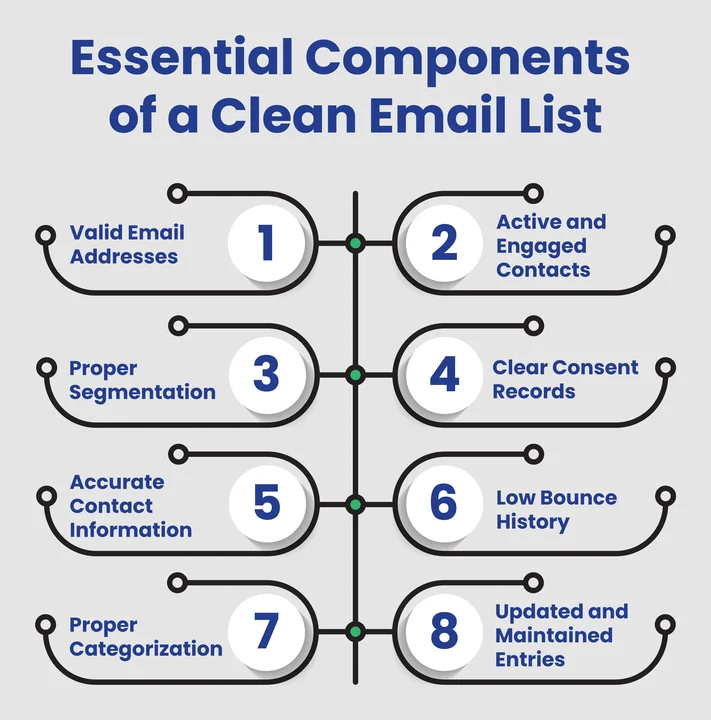
Valid Email Addresses
Every email address should be real, active, and deliverable. Mistyped or outdated addresses can cause bounces, negatively impacting deliverability. Using verification tools can help prevent invalid addresses from entering your list to begin with.
Active and Engaged Contacts
An email list doesn’t just need to exist; it needs to interact. People who open, click, or interact with your emails. Including only active contacts ensures your campaigns reach an audience that engages, while inactive contacts can drag down engagement metrics and affect your inbox placement.
Proper Segmentation
Segmenting your contacts by behavior, preferences, location, or demographics allows you to send messages that are relevant to each group. Segmentation improves engagement, reduces unsubscribes, and makes your campaigns feel more personal.
Clear Consent Records
Every contact should have explicitly opted in to receive your emails. Keeping detailed consent records helps you ensure compliance with GDPR, CAN-SPAM, and other regulations but also demonstrates respect for your audience, which strengthens trust and your reputation as a sender.
Accurate Contact Information
Beyond email addresses, your list should include correct names, company information, job titles, and any other relevant details that help you personalize campaigns. Personalization increases engagement and makes your emails feel more relevant and meaningful.
Low Bounce History
Keep an eye on bounce rates; hard bounce or generate delivery errors should be removed. High bounce rates signal to email providers that your list may be unreliable, which can hurt email deliverability. Keeping bounce rates low helps maintain a healthy, responsive list.
Proper Categorization
Contacts should be categorized based on engagement level, customer type, or interests. Categorization allows for smarter targeting, ensures messages are relevant, and improves engagement rather than blasting your whole list with the same content.
Updated and Maintained Entries
Regularly checking for outdated or inactive contacts keeps your list current. People change jobs, companies, or addresses, so it’s vital to keep your information updated. An updated list ensures your emails reach the right audience while maintaining your sender reputation.
How Does EmailVerify.io Help You Keep Your List Clean?
A healthy email list is the foundation of successful email marketing. EmailVerify.io ensures your lists are valid, active, and safe to send to, helping you protect your sender reputation and improve campaign performance.
Verify Emails for Accuracy
Use verification tools to verify your list, or individual addresses, to confirm they are real and deliverable. Mistyped, outdated, or inactive emails are flagged so you can remove them before they cause bounces or reduce deliverability.
Spot Risky or Generic Addresses
Generic addresses like info@, admin@, or temporary/disposable emails can lower engagement and increase spam complaints. EmailVerify.io identifies these risky contacts, helping you decide whether to include or exclude them.
Detect Catch-All Domains
Catch-all servers accept all emails, known as “catch-all” addresses. While not all are harmful, some hide inactive or risky accounts. EmailVerify.io flags catch-all domains and provides activity insights, helping you make informed decisions about keeping or removing them.
Protect Against Spam Traps and Chronic Complainers
Spam traps, often hidden in old or purchased lists, can damage your sender reputation. EmailVerify.io detects these high-risk addresses so you can remove them safely and maintain strong inbox placement.
A Step-by-Step Guide: How to Clean and Verify Your Email List?
By verifying your emails with EmailVerify.io, you can focus on sending to real, engaged contacts and get better results from every campaign.
Getting your email list in top shape has never been easier. With EmailVerify.io, you can quickly scan and validate your list, remove invalid addresses, reduce bounces, and protect your sender reputation, all without any complicated setup.
Here’s a simple step-by-step guide to help you get started:
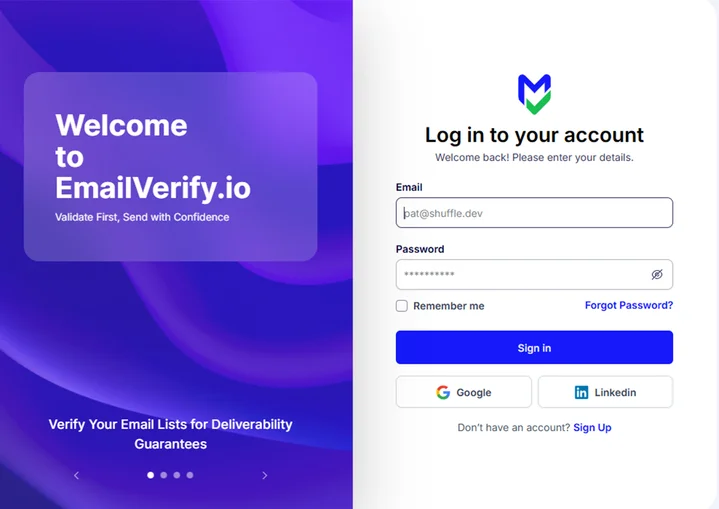
1. Sign Up or Log In to Your Account
Start by creating an account on EmailVerify.io, or log in if you already have one. The sign-up process is fast and intuitive, requiring only basic details to secure your dashboard. Once you’re logged in, you’re ready to begin improving your email campaigns.
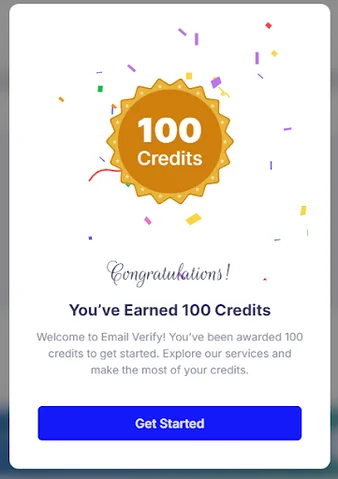
2. Claim Your 100 Free Credits
Immediately after signing up, you’ll receive 100 free credits to test the service. These credits allow you to verify emails directly, explore the dashboard features, and verify validation. It’s a risk-free way to see how cleaning your list can enhance deliverability and engagement.
3. Upload Your Email List
Next, upload your email list to EmailVerify.io. Once uploaded, the tool will quickly scan your list, identifying invalid, outdated, or duplicate addresses that could harm your campaigns.
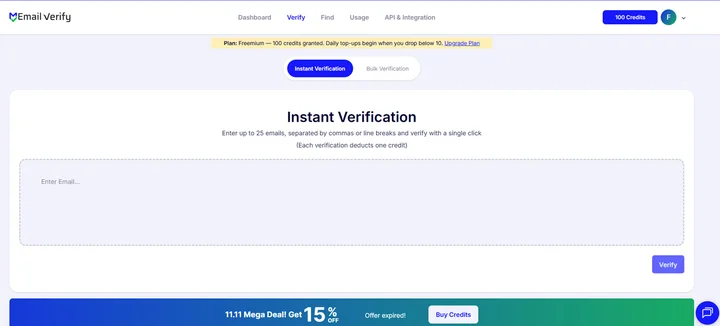
4. Single Email Verification
For individual contacts, use the single email verification feature. Simply enter the email address you want to check, and the tool will instantly confirm its validity in seconds. This is ideal for testing new leads, verifying high-priority contacts, or double-checking important emails before sending.
5. Bulk Email Verification
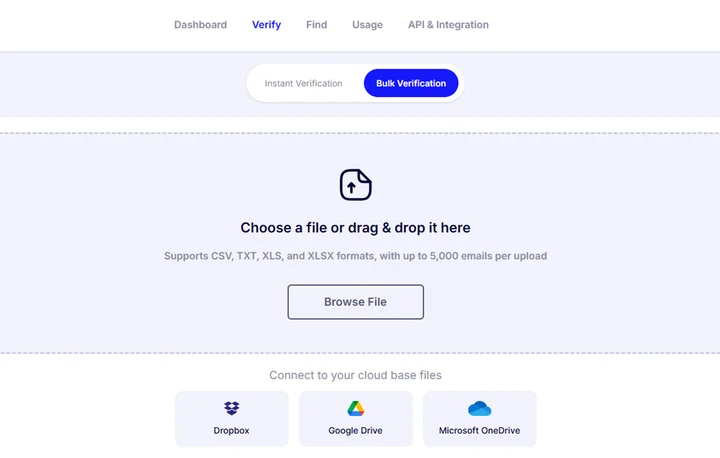
For larger lists, the bulk verification tool is perfect. EmailVerify.io examines your entire database, flagging invalid addresses, disposable emails, role-based accounts, and other risky contacts.
After this process, you’ll have a fully cleaned list that’s ready for sending campaigns with confidence.
6. Protect Your Sender Reputation
A clean list helps you maintain a strong sender reputation. By removing invalid or risky contacts, you reduce bounce rates, lower spam complaints, and signal to email providers that you are a trustworthy sender. This ensures your emails reach the inbox, not the junk folder.
7. Send Emails with Confidence
Finally, you’re ready to send. Launch your campaigns knowing that your messages will reach real, engaged recipients. This not only boosts open and click-through rates but also maximizes your marketing ROI.
10 Practical Strategies to Keep Your Email List Clean and Active
Having a healthy email list is one thing; keeping it that way takes consistent effort. Luckily, there are practical strategies you can adopt to ensure your list stays clean, active list and scale your emails reach the right audience.
Here’s how to keep your email list in great shape:

1. Schedule Regular List Audits
Review your email list on a set schedule, monthly or quarterly. Identify inactive contacts, outdated domains, or chronic complainers. Regular audits prevent problems before they impact your campaigns.
2. Remove Inactive Subscribers Strategically
Instead of deleting every inactive contact immediately, consider a re-engagement campaign. Segment those who haven’t opened an email in 6-12 months. Send a distinct “Is this still you?” or “We miss you” email. Those who don’t respond can then be removed safely.
3. Use Double Opt-In
Validate new signups and existing contacts with an authentic email verification tool. This helps catch typos like .gnail instead of .gmail, and risky role-based emails early, protecting your sender reputation and keeping your list clean.
4. Segment Your Lists
Let subscribers choose what type of content they want and how often they receive it. Combine this with behavior-based segmentation to ensure your emails are relevant, reducing spam complaints and improving engagement.
5. Monitor Engagement and Metrics
Keep an eye on open rates, click-through rates, bounce rates, and spam complaints. Metrics highlight areas of concern, helping you take corrective action before small problems turn into bigger issues.
6. Keep Contact Information Updated
Send occasional reminders to update their details periodically. Updated names, locations, or job titles help personalize campaigns and make your messages more meaningful.
7. Avoid Buying Email Lists
Build your audience organically. Purchased or scraped lists are often filled with inactive addresses or spam traps, which can damage deliverability and your sender reputation.
8. Set Up Automation for List Cleaning
Use automation rules to automatically tag or remove bouncing emails, inactive contacts, or unsubscribes. Automation reduces manual effort and keeps your list consistently clean.
9. Handle Hard Bounces Immediately
Make sure everyone involved in email campaigns understands the importance of a clean list. Establish guidelines for verifying new contacts, respecting unsubscribe requests, and segmenting properly.
10. Celebrate Small Wins
Recognize improvements in open rates, reduced bounces, or better inbox placement after cleaning your list. Positive reinforcement encourages teams to keep email hygiene a priority.
Your Subscribers Won’t Wait Forever. Why Should You?
The Technical Essentials You Need to Maintain a Clean Email Strategy
Keeping your list clean is only part of the picture. Your technical setup plays a big role in determining where your emails land. Even if your list is in great shape, weak authentication settings can still push your messages into spam.
That’s why understanding a few core technical steps can significantly improve your sender reputation and help your emails reach the inbox.
Below are the main technical factors every sender should watch closely:
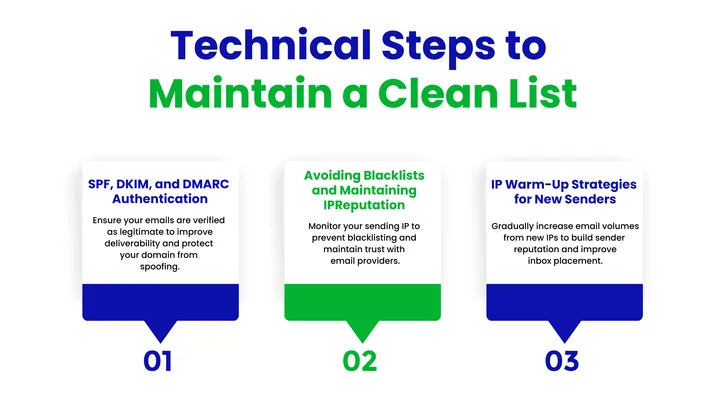
SPF, DKIM, and DMARC Authentication
These three authentication protocols work together to prove your emails are legitimate.
- SPF tells receiving servers which IPs are allowed to send emails on your behalf.
- DKIM adds a digital signature to your messages, confirming they haven’t changed in transit.
- DMARC connects SPF and DKIM and instructs receiving servers on what to do if authentication fails.
When you configure all three correctly, providers gain confidence in your emails. This boosts inbox placement and protects your domain from spoofing.
Avoiding Blacklists and Maintaining IP Reputation
Every sending IP carries a reputation. If it repeatedly sends to invalid contacts, spam traps, or disengaged users, it can be flagged by blacklists.
Landing on a blacklist can trigger sudden drops in deliverability, blocked campaigns, and long recovery periods. Regularly monitoring your IP reputation helps you catch early warning signs and avoid major disruptions.
IP Warm-up Strategies for New Senders
If you’re sending from a new IP, sudden volume spikes trigger suspicion. A proper warm-up strategy builds trust gradually.
Start with small volumes, then increase slowly. Prioritize your most engaged contacts first. This pattern signals to email providers that recipients want your emails, which helps build a strong reputation from day one.
Debunking Common Myths About a Clean Email List
Misconceptions about email cleaning often lead to hesitation or confusion. Some ideas persist even when they don’t reflect reality. Here are three of the most common myths regarding clean email lists, and why they don’t tell the full story.
Myth 1: Cleaning List Reduces Its Value Too Much
It’s tempting to think that removing inactive contacts shrinks your reach and limits the potential of your campaigns. After all, a bigger list feels more impressive, and fewer addresses might seem like a loss of opportunity.
Here’s the Fact:
In reality, engaged audience is far more valuable than a large, inactive one. Inbox providers notice engagement metrics like opens and clicks. When your list is focused on active contacts, your emails land more reliably. Campaigns perform better, and every message has a higher chance of being read.
Myth 2: Spam Complaints Don’t Matter for Small Lists
Some marketers assume that if their list is small, a few spam complaints won’t have much impact. Or worse, that nobody will notice when one or two people mark your email as spam.
Here’s the Fact:
Just a few complaints can harm your sender’s reputation. Email providers track these signals carefully, and increase in even from a handful of contacts, make algorithms more cautious about delivering your messages in future. A clean email list helps you avoid these risks.
Myth 3: Once Cleaned, My List Stays Clean Forever
It’s tempting to think that one thorough cleaning session is enough, and your list will stay in excellent shape indefinitely.
Here’s the Truth
Email addresses naturally degrade over time. People change jobs, abandon old addresses, or stop engaging. Without ongoing maintenance, your list slowly becomes stale, bounces increase, and engagement drops. Regular cleaning is essential to keep your campaigns effective and your sender reputation strong.
Conclusion: Why Clean Email Should Be a Priority for Every Sender
Maintaining a clean email list is a fundamental of effective email marketing. Throughout this guide, we’ve seen how a tidy, accurate, and engaged list improves inbox placement, reduces bounces, protects your sender reputation, and ensures your messages reach the people who truly value them.
We’ve also explored the technical side, from SPF, DKIM, and DMARC to IP reputation and warm-up strategies, showing that a clean list alone isn’t enough without proper email infrastructure.
Along the way, we debunked common myths that can hold marketers back and highlighted practical strategies to keep your list active and reliable.
So, what’s the takeaway?
A well-maintained email list is an investment in trust, engagement, and campaign performance. Regularly cleaning your list, monitoring metrics, and maintaining technical best practices ensures your emails get the attention they deserve.
If you haven’t reviewed your email list recently, now is the perfect time.
Start small, take consistent steps, and watch your deliverability, engagement, and sender reputation improve with every campaign.
Frequently Asked Questions (FAQs) About Clean Emails
How Can You Re-Engage Inactive Subscribers Safely?
Start with a simple re-engagement campaign that includes a clear call-to-action or a preference update link. Segment these contacts separately to avoid hurting your email deliverability. If they remain inactive, remove or suppress them to keep your email reputation score stable.
Are Role-Based or Generic Email Addresses Risky to Keep?
Yes, addresses like info@, admin@, or support@ often trigger hard bounces or complaints. These addresses can weaken your sender reputation and lower your email deliverability. Validate them first and remove the ones that fail to keep your list clean and reduce your spam score.
How Does a Clean List Improve Deliverability and ROI?
A clean email list improves inbox placement by cutting down bounces, reducing spam complaints, and boosting engagement. Better email deliverability leads to higher conversions and stronger ROI.
How Do You Track Contacts Who Frequently Ignore Your Emails?
Use email list segmentation to classify subscribers based on low engagement, such as those who haven’t opened an email in 30, 60, or 90 days. Tracking these patterns early helps you manage low-quality contacts, maintain solid email hygiene, and avoid the negative impact of a dirty list on deliverability.
Still Hoping for High ROI While Sending Emails to Ghosts?


