


Global hard bounce rates have been dropping for three consecutive years. The International Email Benchmark Report 2024 by GDMA shows a decline from 0.92% in 2021 to 0.44% in 2023.
Fast forward to 2025, and Mailchimp puts the average at just 0.21%. That’s real progress. It proves that businesses taking list hygiene, consent practices, and email verification seriously are seeing the payoff.
But if you’re still watching your campaign results dip, your sender reputation slip, or leads fade before they even reach the inbox due to bounced emails, you’re not alone. And you’re not stuck. This guide is built for you.
Here, you’ll find the pieces that actually explain and solve email hard bounces instead of dancing around them:
- What is a hard bounce, and why do they happen
- How do hard bounces impact your email deliverability
- How to identify email hard bounces
- Practical ways to fix and reduce hard bounces from scratch
Let’s make sure your emails land where they’re supposed to (not in the void).
Table of Contents
What Is An Email Hard Bounce?
You type out a perfectly put-together email campaign and hit send. Minutes later, it bounces back. You check the email logs, and the address reads something like [email protected].
A simple typo, yes. But it’s enough to derail your carefully planned message before it hits the inbox. That’s a hard bounce in email marketing.
Unlike a soft bounce, which is a temporary email failure, a hard bounce is permanent. The address is invalid, closed, or doesn’t exist.
What Are The Causes Of Hard Bounces?
Hard bounces don’t come out of nowhere. They usually point to one thing: your email list includes addresses that were never going to receive your message in the first place. When that happens often enough, email bounces stop being a side metric and start eating into deliverability.
These are the hard bounce causes that show up again and again in real campaigns:
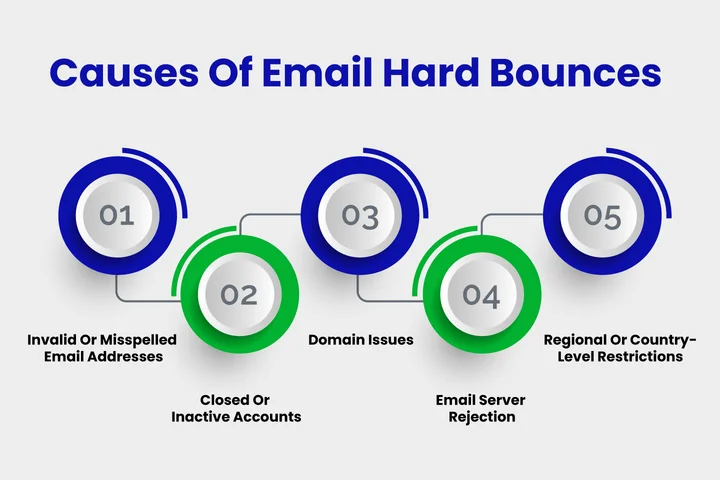
1. Invalid Or Misspelled Email Addresses
This is the most common one, and it’s rarely dramatic. A tiny typo like gamil.com instead of gmail.com is all it takes for a permanent failure.
It usually slips in through:
- Manual entry mistakes and small typographical errors
- Signup forms without proper checks
- Missing real-time email validation at the point of capture
Each one looks harmless on its own. But together, they quietly push up your bounce rate and chip away at campaign performance.
2. Closed Or Inactive Accounts
Some addresses look fine, but are long gone. People change jobs. Companies shut down mailboxes. Old accounts fade out without notice.
From the email server’s side, these are non-deliverable. Keep sending to inactive accounts, and email deliverability starts slipping. Lead flow becomes unpredictable, even when everything else looks right.
3. Domain Issues
At times, the issue isn’t the person. It’s the domain behind the address.
Expired domains, temporary setups, or a non-existent domain trigger an instant stop. No retries. No second chances. This is where poor sourcing and neglected email list health and maintenance tend to surface.
4. Email Server Rejection
Not every hard bounce is about a bad address. Some are hard rejections from the receiving system itself.
You’ll usually see this when:
- Spam filters flag your sending patterns
- Your domain reputation takes a hit
- Authentication issues show up through SMTP error codes
When these stack up, it’s no longer just a bounce problem. It’s a trust problem that needs serious bounce handling.
5. Regional Or Country-Level Restrictions
This one catches many teams off guard. Certain regions apply stricter server controls, especially government or regulated networks. In those cases, mail servers may:
- Reject external senders entirely
- Block specific IP ranges or TLDs
- Enforce tighter compliance rules
All of this shows up as hard bounces in your email logs, even when the address itself is valid. It’s a common blind spot for teams trying to avoid hard bounces in B2B email marketing across geographies.
Are Typos and Inactive Accounts Raising Your Bounce Rate? Verify new signups in real time to catch invalid addresses and reduce hard bounces with EmailVerify.io.
Why Are Hard Bounces Bad For Email Deliverability?
Even a few hard-bounced email addresses can quietly sabotage your email campaign. Your email list loses credibility with email servers, and your messages may stop landing where they matter most.
Gmail even highlights the importance of tackling even the smallest amount of bounces in its Email Sender Guidelines:
“If messages start bouncing or start being deferred, reduce the sending volume until the SMTP error rate decreases. Then, increase slowly again. If bounces and deferrals continue at a low volume, review individual messages to identify problems. For example, you can try sending a blank test message and see if it experiences issues.”
Now it’s advisable to keep your bounce rate as close to 0 as possible, but we know that’s not practical. Therefore, try to keep it at 2% or below it.
Let’s see how these hard bounces can affect your deliverability:
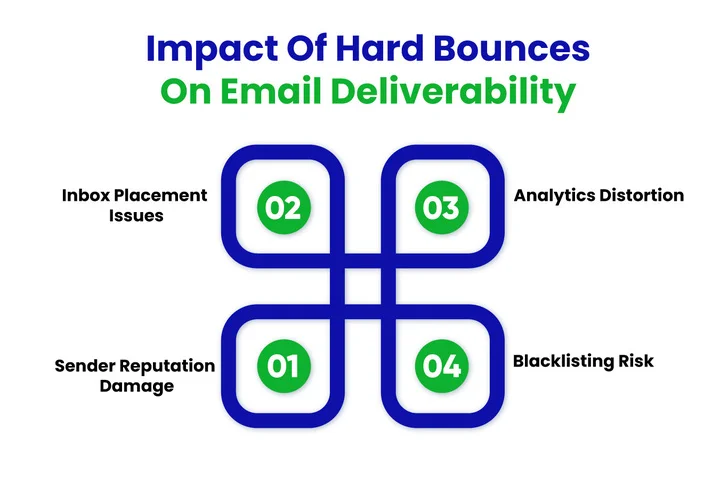
1. Sender Reputation Damage
Repeated hard bounces directly lower your domain reputation. Internet Service Providers track bounce patterns, and a poor bounce rate signals that you’re not managing your email list responsibly.
Examples of the impact:
- Can trigger ISP warnings
- May require manual review of hard-bounced emails
- Affects B2B email deliverability if sending to corporate domains
2. Inbox Placement Issues
A high number of hard bounces increases the chance that your emails get filtered as spam. Even your most engaged subscribers might miss messages if the email server flags you.
Consequences include:
- Lower inbox placement reduces visibility
- Distorts campaign performance metrics
3. Analytics Distortion
Hard bounces skew your reporting. Open rates, click-throughs, and conversions may appear lower than they really are. This hides real engagement patterns.
For instance, a double opt-in process or email verification service can reveal which addresses are valid, so you’re measuring actual engagement.
4. Blacklisting Risk
Persistent hard bounces put your domain and IP at risk of being blacklisted. And recovery requires audits, email verification, and careful email list hygiene.
What it can trigger:
- Stricter spam filters from email service providers
- Reduced lead generation across campaigns
- Extra checks on domain reputation
How To Identify Hard Bounces?
Hard bounces signal that your email campaign is hitting dead ends. Ignoring them can silently erode your sender reputation and waste your lead generation efforts. The good news is that identifying them is straightforward if you know where to look.
Here’s how the pros pinpoint these permanent delivery failures.
1. Check Bounce Reports
Platforms like Mailchimp, SendGrid, or Klaviyo make it easy to see which emails didn’t reach their targets. Bounce reports show if your email failed temporarily (soft bounce) or permanently (hard bounce).
Pay attention to recurring invalid email addresses or patterns with misspelled domains. Spotting these early helps you keep your email list clean and avoid unnecessary hits to your domain reputation.
2. SMTP Error Codes
Every hard bounce comes with an SMTP error code. Understanding these codes is a simple way to know exactly what went wrong.
| SMTP Code | What It Means |
|---|---|
| 550 | Mailbox unavailable or invalid address |
| 551 | User not local or forward refused |
| 552 | Storage exceeded or mailbox full |
| 553 | Domain does not exist or misspelled domain |
| 554 | Transaction failed or blocked sender address |
These codes can tell you if it’s a typo, a closed account, or a server-level block. Knowing this helps you take the right action without guessing.
3. Email Logs
Your email logs are often overlooked, but they’re essential for understanding why messages fail.
Logs show the path each email took, any email server issues, or any authentication issues or any non-existent domains that led to the rejection of messages.
Reviewing these logs can reveal:
- Problematic addresses in purchased or rented email lists
- Patterns of repeated bounces from certain domains
- Server or configuration issues that affect deliverability
4. Real-Time Validation
The easiest way to stop hard bounces before they happen is to validate addresses as they come in. Real-time email validation services catch typos, inactive accounts, and domains that don’t exist at the point of submission.
Coupling this with double opt-in verification ensures your email list stays healthy and your hard bounce rate stays low. It’s one of the simplest ways to protect your campaign performance and sender score.
5. Segmentation
Sometimes, hard bounces aren’t about individual addresses but the segments. For example, older corporate domains or inactive accounts can consistently fail. Tracking these trends allows you to:
- Focus on fixing problem segments first
- Avoid sending to inactive accounts repeatedly
- Maintain email deliverability without affecting engaged subscribers
By combining reports, logs, real-time checks, and segmentation, you get a complete view of hard bounce identification and management.
Stop a bounce spike from hurting your campaigns.
How to Fix Hard Bounces Immediately?
So, you have hit a few email hard bounces… now what?
Seeing a spike in hard bounces can feel like watching leads evaporate before your eyes. But here’s the good news. If you act quickly within 24 hours, chances are it can save your sender’s reputation.
You need to identify the weak spots in your process and patch them before they spread.
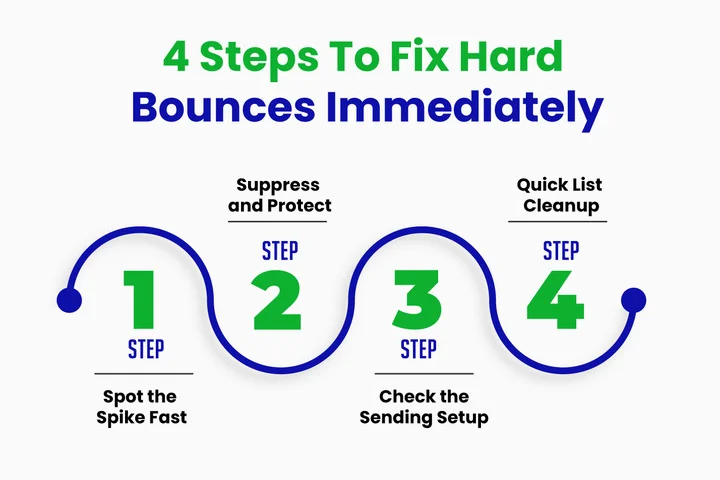
Step 1: Spot the Spike Fast
Open your ESP dashboard and look at recent campaigns or imported lists. Where are the hard bounces concentrated?
You might notice:
- A single form submission introducing multiple invalid addresses
- One campaign suddenly failing with a specific domain
- Rented or purchased lists spiking your bounce rate
Quick Tip: Track patterns over the last few campaigns, not just the current one, to identify recurring trouble spots.
Step 2: Suppress and Protect
Once the problematic addresses are identified, remove them from active campaigns immediately. Continuing to send risks to your domain and IP being flagged.
- Add hard-bounced emails to your global suppression list
- Remove them from every segment they appear in
- Pause campaigns targeting affected domains until cleaned
Quick Tip: Set up automated suppression rules in your ESP to prevent repeat mistakes.
Step 3: Check the Sending Setup
Not all hard bounces come from the recipients. Misconfigured SPF, DKIM, or DMARC, blocked sender IPs, or unusual SMTP restrictions can cause permanent failures.
Quick check:
- Verify authentication for your sending domain
- Test your IP and domain against blocklists
- Ensure email content and sending frequency follow best practices
Step 4: Quick List Cleanup
You don’t have to do a full-scale audit for every bounce. Focus on segments with high-value leads first. Run real-time validation or email verification for just these groups.
Document what you find. Understanding patterns in hard bounces informs smarter segmentation, better double opt-in verification, and stronger email list hygiene practices in the future.
Quick Tip: Maintain a log of all interventions so you can spot trends and prevent similar spikes later.
Best Practices To Prevent Hard Bounces
It’s better to prevent hard bounces in the first place than to find ways to fix them, isn’t it?
There are a lot of best practices to boost email deliverability and make sure your campaigns reach the inbox. We’ve compiled the top ones right below:
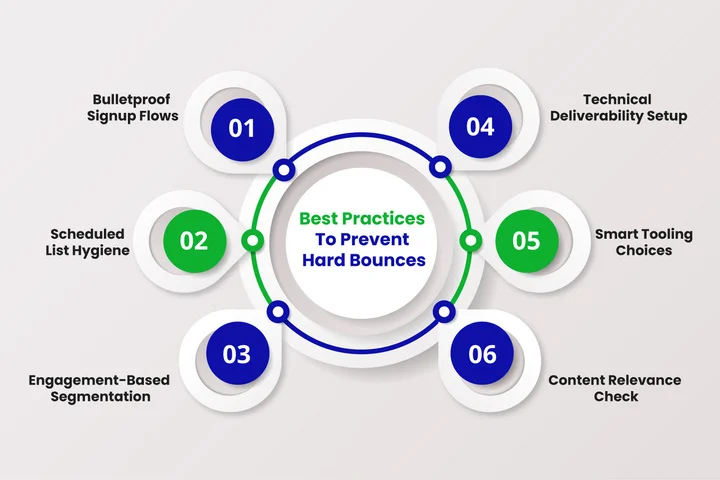
1. Bulletproof Signup Flows
Your signup forms set the tone for list health. Double opt-in confirmation ensures only real subscribers make it onto your email list. Real-time email validation at the point of submission catches typos, inactive accounts, and nonexistent domains before they ever reach your campaigns.
For high-risk forms, add CAPTCHA or domain whitelisting to block bot submissions or fake entries.
2. Scheduled List Hygiene
Keep your email list clean, but that doesn’t mean you need to scrub it every day.
So, how often should you verify your email list?
Running monthly checks, quarterly deep cleans for accounts inactive 18+ months, and weekly monitoring of recent signups keeps your list healthy without overdoing it.
3. Engagement-Based Segmentation
All subscribers are not equal. If someone hasn’t opened emails in three to six months, it’s worth evaluating to what extent they stay on your active lists.
- Re-engagement campaigns first
- Remove subscribers with zero activity after attempts fail
- Cap sending frequency according to engagement tier
4. Technical Deliverability Setup
Even a perfectly verified list can fail if your sending setup isn’t solid. Proper domain authentication with SPF, DKIM, and DMARC ensures ISPs recognize you as a legitimate sender.
Consistent sending volume and IP warming for new domains reduce the chances of hard bounces caused by blocked sender addresses or SMTP port issues.
5. Smart Tooling Choices
Choosing the right tools can be a decisive factor, for sure. Use ESPs with built-in bounce handling, like SendGrid or Postmark. Pair them with GDPR- and CCPA-compliant email verification services.
These services check addresses in real time, flag invalid accounts, and keep your email list healthy. Predictive analytics tools can also highlight high-risk addresses before you even hit send.
6. Content Relevance Check
It’s not just technical. Engaging, relevant email content keeps subscribers active, reduces complaints, and lowers the chance of being filtered or blocked.
Review subject lines, personalization, and sending frequency regularly to maintain interest and prevent deliverability issues.
You can do this by:
- Running A/B tests on subject lines and content blocks
- Segmenting your list based on interests, past engagement, or purchase behavior
- Scheduling emails based on subscriber time zones and engagement history
Wrapping It Up
Hard bounces don’t have to be a mystery or a constant drain on your campaigns. Understanding why they happen, spotting patterns early, and putting proactive measures in place keeps your emails landing in inboxes and your leads engaged.
When was the last time you really checked your list to see how healthy it is?
The time to act is now. Clean up inactive accounts, verify email addresses, and use tools like EmailVerify.io to stay ahead of hard bounces. Each small step improves your sender reputation, protects your campaign performance, and ensures your emails reach the people who matter most.
The sooner you start, the smoother and more effective your email campaigns will run.
Frequently Asked Questions (FAQs)
2. What Is The Difference Between A Hard Bounce And A Soft Bounce?
A hard bounce means the email address is permanently invalid, while a soft bounce is usually temporary, like a full inbox or a short server issue. Knowing the difference between hard bounce and soft bounce helps you decide whether to remove an address right away or monitor it before taking action.
3. Can Purchased Or Rented Email Lists Ever Be Safe To Use?
Purchased or rented lists are high-risk. Even if they’re verified initially, they often contain outdated or inactive addresses, leading to spikes in hard bounces. If you must use them, pair with real-time email verification and monitor bounce reports closely.
4. How Can I Prevent Hard Bounces From Returning After Cleanup?
Preventing recurrence is about process, not just cleaning. Maintain double opt-in flows, monitor engagement patterns, and segment inactive subscribers. Regular list hygiene, technical deliverability checks, and real-time verification together keep hard bounces under control.
5. Should I Ever Try Resending Emails That Hard Bounced?
In most cases, no. A true hard bounce means the address is permanently undeliverable. Resending only increases the risk to your sender reputation. The safer move is to suppress the address immediately and focus on list cleanup rather than retries.
6. Can One Bad Campaign Cause Long-Term Deliverability Issues?
Yes, especially if it includes a high volume of hard bounces. ISPs look at patterns, but a sudden spike can trigger filtering or closer scrutiny. That’s why quick action matters. Cleaning the list, slowly sending volume, and verifying new addresses can prevent lasting damage.
Want a Healthier List and Higher Campaign ROI? Use EmailVerify.io to maintain accurate addresses, improve engagement, and boost deliverability.


