

Clients expect every email to land perfectly in their subscribers’ inboxes. Yet for agencies managing multiple client accounts, even a small rise in spam complaints can quickly undermine deliverability, strain client trust, and hurt long-term results.
The risk is real. According to Litmus, 70% of emails show at least one spam-related issue during testing, increasing the likelihood of inbox placement problems. For agencies, this means a single overlooked detail, an outdated list, poor targeting, or weak compliance can affect multiple campaigns at once.
The good news is that spam complaints are rarely random. With the right processes in place, clean lists, relevant messaging, compliant setups, and smart tooling, agencies can significantly reduce complaints and protect deliverability across every client they manage.
In this guide, we’ll break down the most common causes of spam complaints and share practical, agency-friendly strategies to keep campaigns performing consistently.
Table of Contents
What Causes Spam Complaints in Client Campaigns?
Spam complaints usually come from small issues that add up over time. When you’re handling multiple clients, these problems can repeat across accounts if they aren’t addressed early. Understanding the root causes helps you fix them before they impact inbox placement.
The following are the most common causes:
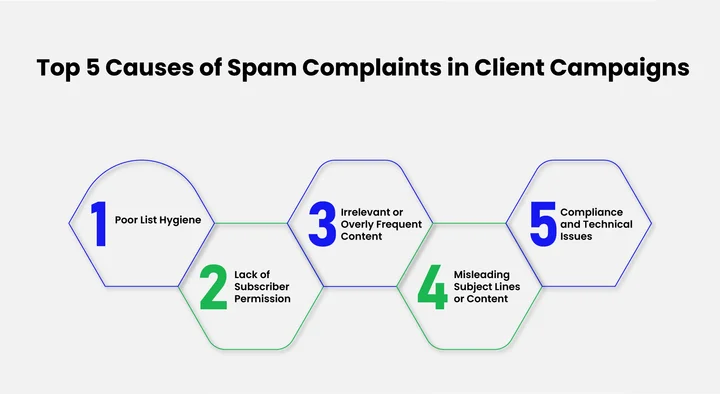
1. Poor List Hygiene
Outdated or invalid email addresses increase bounce rates and frustration. When your emails keep reaching inactive inboxes, recipients are more likely to mark them as spam. Regular list cleanup helps you reach people who actually want to hear from your clients.
2. Lack of Subscriber Permission
Emails sent to recipients who didn’t opt in are a fast track to complaints. Agencies should ensure that all client campaigns follow permission-based marketing practices, ideally using double opt-in to confirm subscriptions. This not only lowers complaints but also protects deliverability and reputation.
3. Irrelevant or Overly Frequent Content
Even genuine subscribers can lose patience if emails feel off-topic or arrive too often. Without proper segmentation or frequency control, engagement drops and complaints rise.
4. Misleading Subject Lines or Content
When subject lines don’t match the message inside, trust breaks down quickly. Clear, honest messaging helps you set the right expectations and lowers the risk of spam reports.
5. Compliance and Technical Issues
Failing to comply with laws like CAN-SPAM or skipping technical email setup (SPF, DKIM, DMARC) can also trigger spam complaints. Ensuring proper compliance and authentication keeps emails trusted by inbox providers and recipients alike.
What Are Early Warning Signs Agencies Should Watch Before Complaints Rise?
Before your clients start seeing spam complaints, subtle signals can indicate that a campaign is heading off track. Keeping an eye on these early warnings helps you act quickly and prevent bigger problems.
Open Rates Dropping
If fewer people are opening your emails than usual, it can be a sign that subscribers are losing interest or that your messages are starting to land in spam folders. Spotting this early lets you adjust content, timing, or targeting before complaints spike.
Bounce Rates Creep Up
A gradual increase in bounced emails often points to outdated or invalid addresses. Monitoring this closely means you can clean the list promptly and avoid unnecessary spam flags.
Engagement Decay Across Segments
When clicks, replies, or other engagement metrics start declining across multiple subscriber groups, it can indicate that your emails aren’t relevant or timely. Early detection lets you resegment your lists or tweak messaging to keep campaigns effective.
By watching for these signals, you can catch potential issues before they snowball. Monitoring engagement metrics to lower complaints and paying attention to spam complaint thresholds helps you stay proactive.
This keeps your campaigns running smoothly, making it easier to implement email deliverability best practices and keep complaints low across all clients.
Minor Email Problems Can Quickly Snowball Across Your Clients’ Campaigns.
With EmailVerify.io, your agency ensures every client email is valid, keeping inbox placement steady and campaigns effective.
8 Best Practices to Reduce Spam Complaints Across Client Campaigns
Agencies juggling multiple clients can’t afford spam complaints. Every complaint affects deliverability, sender reputation, and client satisfaction. There are clear, actionable strategies agencies can use to reduce complaints and keep campaigns running smoothly.
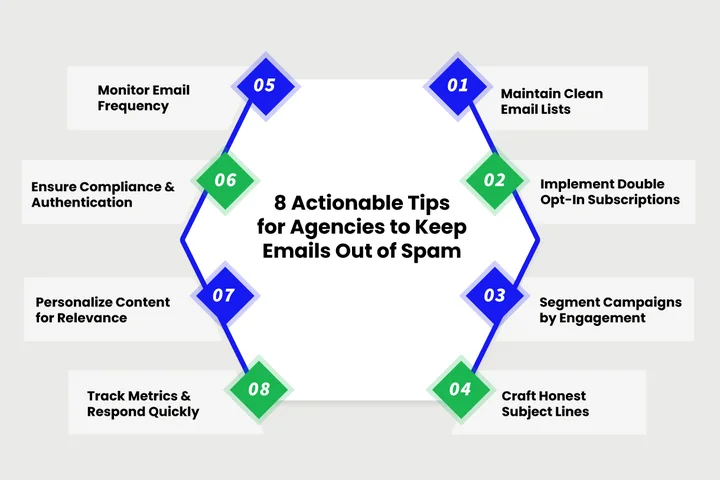
1. Maintain Clean Client Email Lists
Healthy lists are the foundation of low-complaint campaigns. By removing invalid, inactive, or risky addresses, you make sure your emails reach subscribers who are more likely to engage, helping your agency minimize client spam complaints.
For Example: When you clean a fashion eCommerce client’s list before a campaign, complaints drop and engagement improves because messages go to active subscribers only. Using EmailVerify.io for bulk verification makes it easy to spot and remove risky addresses before sending.
2. Implement Double Opt-In Subscriptions
Double opt-in confirms that subscribers actually want to hear from your clients. This extra step prevents fake or mistyped emails from entering your list and helps you build targeted, high-performing campaigns that reduce spam complaints in email marketing.
Integrating EmailVerify.io’s real-time API can verify new sign-ups in real time, ensuring only valid contacts enter your lists.
3. Segment Campaigns by Engagement
Not every subscriber needs the same message. When you segment by opens, clicks, purchases, or interests, your emails feel more relevant, and subscribers are less likely to mark them as spam.
Example: If an agency managing a travel client divides subscribers into groups based on past bookings and click activity, they will deliver messages that feel personalized to each person. This not only lowers complaints but also boosts engagement because each subscriber receives content that actually matters to them.
4. Craft Honest and Clear Subject Lines
Subject lines should accurately reflect the email content. Clear messaging prevents disappointment and reduces the risk of recipients marking emails as spam.
For example, if an agency working with a health brand ensures subject lines honestly describe the content, they will increase open rates and reduce spam complaints.
5. Monitor Frequency of Emails
Too many emails can overwhelm subscribers, increasing the chances of spam complaints. Campaign schedules should balance consistency with audience tolerance.
Example: If an agency handling a fitness client reduces weekly campaigns from four to two and gives subscribers the option to choose how often they hear from the brand, they will prevent fatigue, reduce spam complaints, and maintain strong engagement across campaigns.
6. Ensure Compliance and Authentication
When you set up proper authentication (SPF, DKIM, DMARC) and follow regulations, inbox providers are more likely to trust your emails. This directly improves deliverability across your client accounts.
7. Personalize Content for Relevance
Personalization goes beyond first names. Using behavior, location, or past interactions helps your emails feel timely and useful, which reduces spam complaints naturally.
An Example: a retail agency used subscriber names and location data to create personalized promotions. Engagement went up, and spam complaints dropped noticeably.
8. Monitor Metrics and Respond Quickly
By keeping an eye on complaints, bounces, and engagement, you can spot problems early. Pausing and fixing issues quickly helps you avoid long-term damage to your clients’ sender reputation.
You can also use EmailVerify.io to recheck or clean lists after campaigns, keeping client databases accurate and campaigns running smoothly.
What’s the Secret to Minimizing Spam Complaints in Client Campaigns?
Even the strongest campaigns struggle if email lists aren’t reliable. When you’re managing multiple clients, keeping lists accurate is one of the most effective ways to reduce spam complaints. A reliable email verification solution for your agency, like EmailVerify.io, makes this simple and stress-free.
It helps you spot invalid, disposable, and risky email addresses before campaigns go out. By fixing list issues early, you protect sender reputation, lower bounce rates, and improve inbox placement across all your clients.
How Does EmailVerify.io Support Agencies?
Accurate Lists: Identify problem addresses so every campaign starts with trustworthy contacts.
Better Deliverability: Prevent bounces and spam complaints by catching risky emails early.
Higher-Quality Leads: Verify new sign-ups instantly to ensure only real, engaged subscribers enter the list.
Clean CRM Records: Update old or outdated emails to keep client databases ready for campaigns.
Quick Verification for Big Sends: Validate large lists efficiently, ideal for promotions or seasonal campaigns.
Simplified Multi-Client Management: Organize lists, dashboards, and workflows for multiple clients without confusion.
By using EmailVerify.io, agencies not only reduce complaints but also save time, improve reporting, and make client campaigns more reliable, helping them consistently deliver strong results.
Final Thoughts
Spam complaints rarely come from one big mistake. They usually build up through small issues, outdated lists, unclear expectations, too many emails, or content that misses the mark. When you’re managing multiple clients, those small issues can quietly affect performance across accounts.
The agencies that see the best results treat spam prevention as part of their everyday workflow. Clean lists, permission-based growth, relevant content, and thoughtful sending habits all contribute to stronger deliverability.
An authentic email verification like that from EmailVerify.io makes this easier to manage at scale. By checking list quality before campaigns go out, you protect sender reputation, improve inbox placement, and keep your clients confident in your results.
The result is an email program that performs consistently, protects reputation, and holds up across every client campaign.
Frequently Asked Questions (FAQs)
2. Do New Email List Sources Increase the Risk of Spam Complaints?
Yes. When you import lists from third-party sources or unverified sign-ups, you risk adding unengaged or fake emails. Always verify new subscribers before adding them to your clients’ lists; you’ll protect deliverability and maintain cleaner campaigns.
3. Can Seasonal Campaigns Cause Higher Spam Complaints?
Absolutely. If you suddenly increase email frequency during holidays or promotions, some subscribers may be surprised and mark emails as spam. By segmenting your lists, adjusting send frequency, and verifying addresses, you can keep complaints low even during peak periods.
4. How Does Engagement History Impact Spam Complaints?
Subscribers who rarely open or click your emails are more likely to mark them as spam. You can regularly segment out unengaged contacts or clean up lists to reduce risk. This keeps your campaigns more effective and your clients’ inbox placement strong.
5. Are Role-Based or Generic Emails a Spam Risk?
Yes. Addresses like info@, support@, or sales@ often bounce or generate complaints. Filtering these with verification tools ensures your emails reach real people who are more likely to engage, improving overall campaign performance.
6. Can Verification Tools Help With Lead Capture Forms?
Definitely. You can integrate EmailVerify.io’s real-time API on signup forms to check emails instantly. This prevents invalid or risky addresses from entering your clients’ lists, helping you keep campaigns cleaner and more reliable from the very first contact.
Set Your Agency Up to Deliver Strong, Measurable Results Every Time!


