

Spam emails might seem harmless, but for you as a marketer, they’re a real problem that directly impacts your inbox placement.
In fact, with the latest sender requirements from Google and Yahoo, keeping your spam complaint rate below 0.1% is now a critical benchmark; once you hit 0.3%, your emails may stop reaching the inbox entirely.
Every day, users end up on your email lists without realizing it, leading to unengaged subscribers, higher unsubscribe rates, and complaints that can hurt your sender reputation. Knowing why this happens is important for keeping your email lists healthy and your campaigns effective.
Many accidental sign-ups happen because of unclear sign-up forms, pre-checked boxes, or incentives like freebies or discounts that your users don’t fully understand. These mistakes frustrate your subscribers and make it harder for you to reach the right audience.
In this blog, we’ll explore the main reasons people sign up for spam emails and share practical steps you can take to prevent it.
You’ll learn how to improve your sign-up process, maintain a high-quality email list, and build trust so your emails consistently reach the inbox, not the spam folder.
Table of Contents
What Counts as Spam or an Unwanted Email?
Not every unwanted email is technically spam, but as a marketer, any message that frustrates your subscribers can hurt your campaigns. It’s not just about compliance; these emails can lower engagement, increase unsubscribes, and even affect your deliverability.
Unwanted emails are messages that your users didn’t consciously opt into or that don’t match their interests, expectations, or consent. To keep your list healthy, it helps to recognize the most common types:
- Accidental Subscriptions: Users who missed a pre-checked box or filled out a form without realizing they were joining a marketing list.
- Invalid Addresses: Typos like [email protected] or [email protected] that immediately result in hard bounces.
- Disposable Emails: “Burner” addresses created for one-time use to grab a discount and then abandoned.
- Unconfirmed Consent: Emails sent to people who never finished a double opt-in process or verified their intent.
This is where address validity and consent confirmation become your best friends.
For Example:
If a user accidentally enters a fake or mistyped email, a real-time verification tool like EmailVerify.io would catch that mistake instantly.
Instead of that “bad” email sitting on your list and hurting your reputation, the user is prompted to provide a valid one.
By understanding what counts as unwanted or “spam-like” emails, you can take proactive steps to protect your email lists, maintain deliverability, and build trust with your subscribers.
Now it’s time to explore the main reasons why users end up on these lists in the first place, and what you can do to prevent it.
Why Do People Sign Up for Emails They Don’t Want?
Many marketers assume that users who sign up for spam emails are careless or inattentive. In reality, most are intentional in their behavior; they are seeking short-term benefits, convenience, or experimentation.
Understanding these reasons people subscribe to unwanted emails can help you implement best practices for spam prevention and protect your sender reputation.
The following factors explain why users often sign up for emails they never engage with.
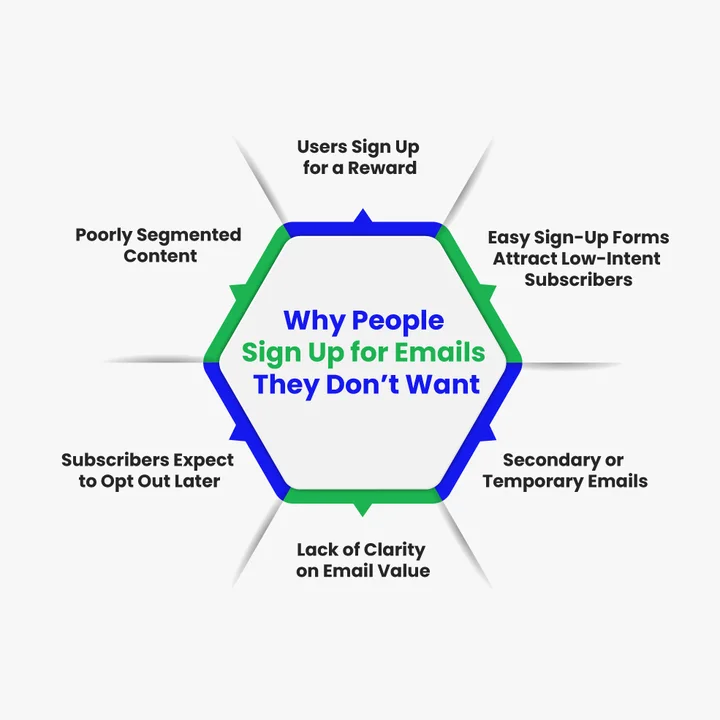
1. They Want the Reward
Your users often sign up just to claim a discount, free resource, or special offer. Once they redeem it, the emails that follow may seem irrelevant to them.
This behavior is transactional; they want the immediate benefit, not an ongoing relationship. From your perspective, this inflates your list without improving engagement.
The Solution: Using email verification services for better email marketing
can help you detect these low-quality addresses before they impact your campaigns.
2. Signup Forms Are Too Easy
Short, frictionless forms may convert quickly, but they attract low-intent subscribers. Without email opt-in consent, clear expectations, or previews of the content, people click “subscribe” casually. Easy sign-ups often lead to disengagement and higher spam complaints in email marketing.
3. Value Isn’t Clear at Signup
Generic phrases like “Subscribe to our newsletter” don’t show your users what they’ll get.
To keep them interested, they need to know:
- How often will you email them?
- What type of content will you send?
- The benefits of staying subscribed.
Without clarity, many users sign up “just in case” and then ignore your emails, reducing engagement and affecting your results.
4. Users Expect to Unsubscribe Later
Some of your subscribers plan to unsubscribe if your emails aren’t useful. Often, this translates to emails being ignored, marked as spam, or piling up unread, damaging your sender reputation before the unsubscribe even happens.
5. Irrelevant Content or Poor Segmentation
Even willing subscribers may disengage if your emails aren’t relevant to them. Using list segmentation and personalization ensures your content matches your subscribers’ interests, reducing the chance of emails being ignored or marked as spam.
6. Overwhelming Email Frequency
Subscribers may sign up without realizing how often they’ll receive emails. Sending too many emails too quickly can frustrate them. Offering preference controls for frequency helps manage expectations and improve engagement.
Quick Checklist: Why Users Subscribe (But Don’t Engage)
Here’s what you should remember about user behavior at signup:
- One-time rewards: They want the discount, not the newsletter.
- Disposable emails: They use “burner” accounts to avoid clutter.
- Low friction: The form was so easy that they signed up without thinking.
- Missing frequency: They don’t know how often you’ll be emailing them.
- Unclear value: They aren’t sure what specific content they’ll receive.
Are You Paying to Send Emails to Secondary “Junk” Inboxes? Block throwaway addresses and focus your budget on active buyers.
In the next section, we’ll explore how spam signups can hurt your marketing and why maintaining a high-quality email list is critical for your campaigns.
How Can Spam Signups Hurt Your Email Marketing?
At first glance, a large email list might feel like a badge of success. It suggests reach and influence. But not all subscribers are created equal. A list filled with low-quality or disengaged users can quietly undermine your marketing efforts and tank your ROI.
Understanding the risks of spam email signups is crucial if you want your campaigns to maintain brand trust, reach the inbox, and produce measurable engagement.
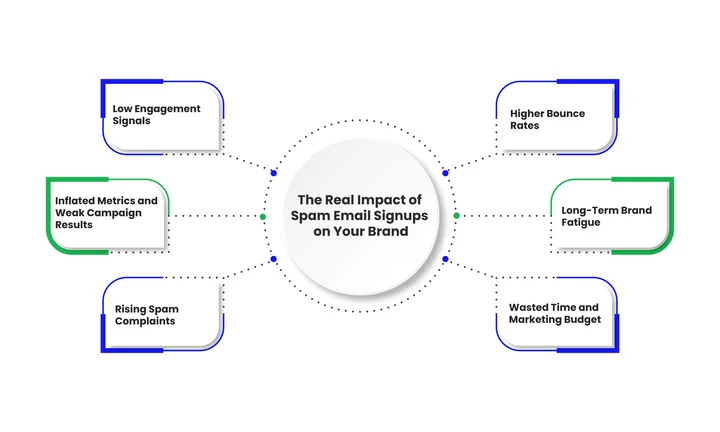
Poor Engagement Signals
Email service providers (ESPs) like Google and Yahoo have become significantly stricter. As of 2024, bulk senders are required to keep their spam complaint rates below 0.3%.
When users sign up for emails they didn’t really want, they are far more likely to hit the “Spam” button instead of unsubscribing.
If you cross that 0.3% threshold, your domain could be blacklisted, ensuring that even your most loyal customers never see your messages.
Increased Hard and Soft Bounces
Spam signups often involve “throwaway,” invalid emails, or fake addresses. This leads to a spike in your bounce rates:
Hard Bounces: These occur when an email address is invalid or doesn’t exist. High hard bounce rates are a major red flag to ISP filters.
Soft Bounces: These are temporary delivery failures, often caused by full inboxes.
Consistent bounces signal to providers that you are a low-quality sender, further damaging your sender reputation.
By checking address validity at the point of entry, EmailVerify.io prevents these invalid addresses from ever touching your list. This keeps your bounce rate near zero and protects your sender reputation.
Inflated Metrics, Weak Results
Low open rates, minimal click-throughs, and limited conversions make it difficult to measure your campaign performance accurately.
This can create a false sense of accomplishment, making it harder for you to justify marketing spend, optimize your campaigns, or identify which content truly resonates with your audience.
Simply put, quantity without quality rarely translates into meaningful results.
Long-Term Brand Fatigue
Subscribers who feel bombarded, misled, or overwhelmed may start associating your brand with annoyance instead of value. Over time, this erodes trust.
When users encounter your emails again, either through another channel or future campaigns, they’re less likely to engage.
Rebuilding credibility takes time and resources, and some potential customers may never return. Brand fatigue is subtle, but it can have lasting consequences for your overall marketing performance.
Using a verification service for your brand ensures you’re building a list of people who actually want to hear from you, protecting your brand’s image.
Increased Spam Complaints
Subscribers who feel tricked or overwhelmed may mark your emails as spam. This is more than a minor inconvenience; high spam complaint rates directly harm your sender reputation.
A damaged sender reputation reduces deliverability across your entire list, meaning even loyal, engaged subscribers might start missing your emails. Spam complaints are one of the fastest ways to get your domain or IP flagged, so this is an issue marketers cannot ignore.
Wasted Marketing Resources
Maintaining and sending emails to disengaged subscribers consumes your time, budget, and energy. Marketing teams may spend hours crafting campaigns, analyzing metrics, or running A/B tests, while a significant portion of the audience never interacts with the content.
This misallocation of resources reduces efficiency and ROI.
Focusing on email list cleaning strategies and high-quality subscribers ensures that your efforts reach the right people and generate measurable results.
The Cost of a Dirty List is Higher Than You Think. Automate your list cleaning to save your budget and your brand’s credibility.
How Can Marketers Reduce Spam Email Signups?
Keeping your email list clean and engaged is key to successful campaigns. By refining your signup process and adopting smarter email marketing practices, you can reduce low-intent subscribers and build a list that truly supports your business goals.
Here are the most effective ways to prevent spam email sign-ups on your site:
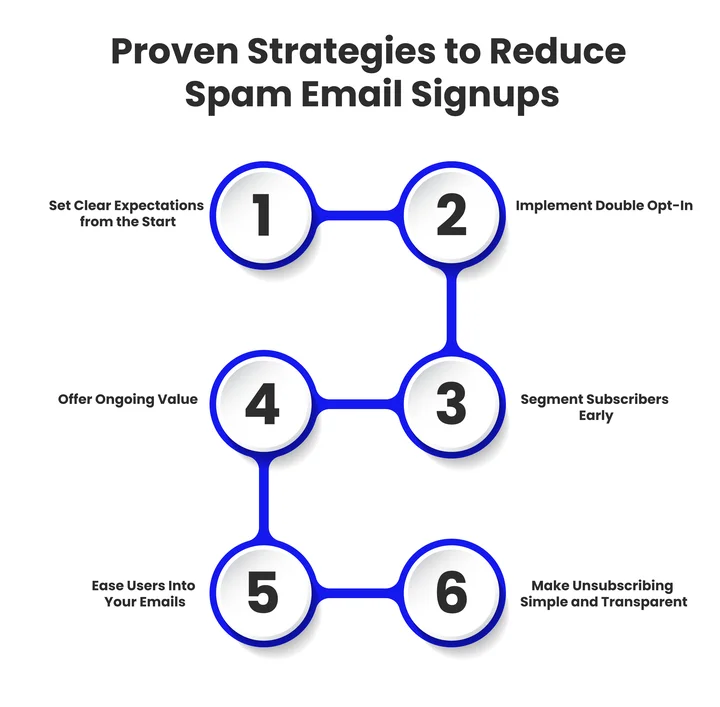
Set Clear Expectations from the Start
The most effective way to keep your list clean is to stop “bad” emails before they ever reach your database. By integrating real-time API into your signup forms, you can validate every address the moment a user hits “Submit.”
This doesn’t just help with list hygiene; it’s about risk prevention. If a user enters a fake address or makes a typo, the API flags it instantly, allowing them to fix it.
This keeps your sender reputation safe from day one and ensures you aren’t paying your ESP to host invalid contacts, providing immediate cost control.
Implement Double Opt-In
Using double opt-in, where subscribers confirm their email address after signing up, is one of the most effective ways to maintain a high-quality list.
Although it may slightly reduce overall sign-ups, it offers key advantages:
- Confirms genuine interest from your subscriber.
- Prevents fake or mistyped emails from entering your list.
- Improves engagement metrics, which boosts deliverability.
This extra step separates casual subscribers from those who are truly invested in your content, helping you maintain a healthy, engaged audience. It’s also wise to verify your emails regularly to remove invalid or low-quality addresses, protecting your sender reputation and ensuring your campaigns reach the right people.
Offer Ongoing Value
Many users sign up only for coupons or freebies. Once they redeem the offer, their engagement drops. To keep your subscribers active, your emails should provide value beyond one-time rewards.
Consider offering:
- Educational content: Guides, tutorials, or industry insights.
- Exclusive resources: Templates, checklists, or insider tips.
- Actionable strategies: Advice subscribers can immediately apply.
When readers see consistent value, they are more likely to remain engaged and develop loyalty to your brand.
Segment Subscribers Early
Segmentation is a powerful way to ensure emails are relevant to each subscriber. Even a simple question at signup can dramatically improve engagement.
For example:
- Which topics interest you most?
- Do you prefer updates on products, tips, or promotions?
Tailoring content to user preferences makes emails feel intentional rather than intrusive, which reduces the likelihood of unsubscribes or spam complaints.
Ease Users Into Your Emails
The first few messages you send set the tone for the entire subscriber experience.
Instead of overwhelming new users with too many emails at once, introduce them gradually:
- Start with a warm welcome email introducing your brand.
- Follow up with one or two high-value emails highlighting your best content.
- Transition into your regular email schedule over time.
This approach builds trust and helps your subscribers see the value of staying on your list.
Make Unsubscribing Simple and Transparent
It might seem counterintuitive, but making it easy for your subscribers to unsubscribe actually protects your list and your brand.
When users can leave easily:
- They are less likely to mark your emails as spam.
- Your sender reputation stays strong.
- Remaining subscribers are more engaged.
A smaller, highly engaged list is always more effective than a large list filled with uninterested users.
Conclusion: Keep Your Email List Clean and Engaged
Managing your email list effectively is about building a community of engaged subscribers who genuinely want to hear from you. Spam email signups can quietly undermine your campaigns, hurt deliverability, and strain your marketing resources.
By understanding why people sign up for unwanted emails and recognizing how these low-quality subscribers affect your results, you can take a proactive stance.
Implementing email verification services for marketing teams, specifically real-time prevention through EmailVerify, ensures you are protecting your sender reputation from the very first click.
Ultimately, a smaller, verified, and highly engaged email list is far more powerful and profitable than a large, disengaged one!
Frequently Asked Questions (FAQs)
How Do Bot Signups Differ From Human Email Signups?
Bot signups are automated and often use fake or invalid email addresses, while human signups come from real users with genuine intent. Bots never engage with your emails, which lowers your engagement metrics. If left unchecked, they can damage your deliverability and sender reputation.
What Are Common Signs That Users Are Signing Up for Spam Emails?
You may notice sudden spikes in signups, very low open rates, or a rise in bounce and spam complaints. Another sign is a high number of inactive subscribers who never engage. These patterns often indicate accidental, low-intent, or automated signups.
What Role Does Personalization Play in Reducing Unsubscribes and Spam Complaints?
Personalization helps you send content that actually matches what your subscribers care about. When emails feel relevant, users are less likely to ignore them or mark them as spam. This leads to better engagement and fewer unsubscribes over time.
Does Your Email Service Provider (ESP) already handle verification?
Most ESPs only perform basic syntax checks and only flag "bad" emails after they’ve already bounced. EmailVerify.io acts as a proactive gatekeeper, stopping invalid or disposable addresses before they ever reach your database. This prevents the initial reputation damage that ESPs often miss.
How can I Attract More Engaged Subscribers?
Focus on clarity and transparency at signup, offer ongoing value beyond discounts, segment users based on their interests, and ease them into your email sequence gradually. These strategies attract subscribers who are genuinely interested in your content.
How Often Should You Email New Subscribers?
Start with a gentle onboarding sequence: a welcome email, followed by one or two high-value emails, and then gradually transition into your regular schedule. Avoid overwhelming new subscribers with frequent emails initially.
Why Settle For a Massive List When You Could Have a Profitable One? Take the first step toward a healthier, more engaged audience right now.


