

Many marketers face the frustration of emails that never reach their subscribers. Studies show that nearly 20% of email lists contain invalid addresses, leading to high bounce rates and lower engagement.
One of the most common reasons is an unverified email list filled with invalid, inactive, or risky addresses. When emails bounce or trigger spam complaints, inbox providers start to lose trust in the sender.
Email list verification helps protect the sender’s reputation by removing addresses that can cause bounces, spam complaints, or blocklist issues. A clean, verified list sends clear trust signals to email providers, making it easier for campaigns to reach active subscribers.
This blog explains how verifying your email list protects sender reputation, what verification involves, and the practical steps marketers can take to keep their lists safe without losing genuine subscribers.
Table of Contents
What Is Email List Verification, and How Does It Protect Your Sender’s Reputation?
Email list verification is the process of checking whether an email address is valid, active, and safe to contact before sending campaigns. It helps identify invalid, inactive, or risky addresses that could harm email deliverability and sender reputation.
When email lists contain unverified addresses, inbox providers receive signals like high bounce rates, spam complaints, or interactions with spam traps. These negative signals reduce trust in the sender and make it harder for future emails to reach subscribers’ inboxes.
Marketers can safeguard their sender reputation in several ways by confirming email addresses:
- Reduce Bounces & Maintain Reputation: Removing invalid addresses lowers bounce rates and builds trust with inbox providers.
- Prevent Spam Complaints: Sending only to engaged subscribers reduces the risk of recipients marking emails as spam.
- Avoid Spam Traps: Verification flags risky or disposable addresses that could trigger spam traps.
Using these practices ensures campaigns reach real, active subscribers while keeping your sender reputation strong.
You can improve deliverability and keep your email list healthy and engaged by adhering to email verification best practices.
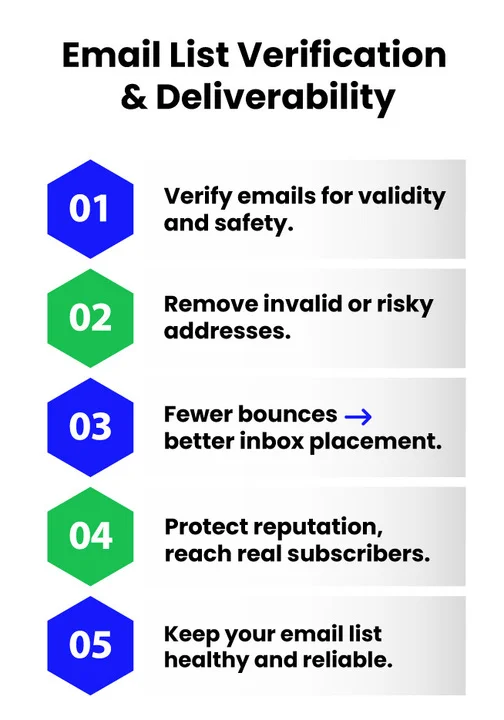
For Example, a B2B SaaS company importing thousands of leads may see bounce rates rise and sender reputation drop if unverified emails remain in the list. Verification ensures campaigns reach real subscribers from the start.
Ongoing email list verification is essential for long-term sender reputation. Regular checks keep your list accurate, reduce bounces, and ensure campaigns consistently reach active subscribers.
Regular verification helps maintain a high-quality email list and maximizes the effectiveness of email marketing campaigns.
Emails bouncing or going unseen? Reach real subscribers and protect your inbox placement fast.
How to Verify Your Email List to Protect Sender Reputation?
Verifying your email list is essential to ensure your campaigns reach real, engaged subscribers while safeguarding your sender reputation. Without proper verification, invalid or risky email addresses can increase bounce rates, trigger spam complaints, and reduce inbox placement.
In this section, we’ll explore practical ways to verify your email list safely, showing how each step helps maintain a clean sending history and strengthens trust with inbox providers.
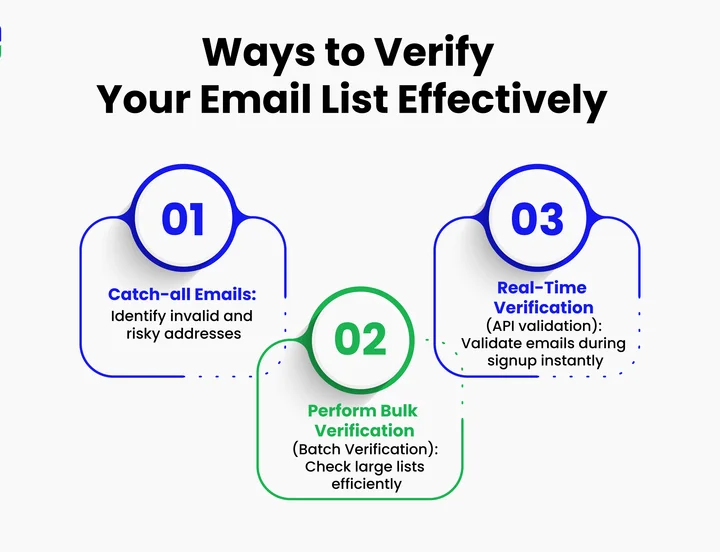
1. Remove Risky Emails Safely (Manual Cleaning/Catch Emails)
The first step in email list cleaning is to identify invalid or risky addresses safely. Correct removal reduces bounces and strengthens your sender reputation.
Tips For Removing Invalid Emails Safely:
- Use reliable email verification tools: These tools can detect invalid, inactive, or disposable addresses without putting your list at risk.
- Test in small segments first: Start by cleaning a small portion of your list to ensure valid subscribers aren’t accidentally removed.
- Re-engage inactive subscribers: Instead of deleting users who haven’t engaged recently, run a re-engagement campaign to confirm interest. This retains legitimate contacts while keeping bounce rates under control.
- Schedule regular list hygiene checks: Consistent verification prevents risky emails from accumulating over time.
Not all inactive emails are invalid. Before removing subscribers who have not engaged recently, consider running a re-engagement campaign to confirm interest. This helps retain legitimate contacts while keeping bounce rates under control.
When To Suppress Instead Of Delete
Addresses that are valid but unresponsive should be suppressed, not deleted. Suppression prevents sending to low-engagement users while preserving data history and protecting your sender reputation. Permanent deletion should be reserved for confirmed invalid or harmful addresses only.
Properly removing risky emails reduces bounces, avoids spam complaints, and ensures your email verification practices can be applied effectively.
Reduce bounce rates, protect your sender reputation, and reach more engaged subscribers.
2. Perform Bulk Verification (Batch Verification)
Bulk verification is a powerful way to efficiently check large email lists, ensuring that only valid addresses remain. This method helps reduce bounce rates, protect your sender reputation, and maintain a high-quality list for your campaigns.
How Bulk Verification Works:
- The entire list is analyzed for syntax errors, domain validity, and mailbox activity.
- Invalid or risky emails are flagged, allowing you to remove or suppress them before sending campaigns.
- Extensive lists can be broken into smaller segments to improve accuracy and prevent errors during processing.
Best Practices for Bulk Verification:
- Use trusted tools: Choose reliable verification services to maintain accuracy.
- Combine with safe cleaning methods: Bulk verification works best when paired with manual checks or with previous risk-removal steps.
- Schedule regular checks: Periodically verifying your list keeps it up-to-date and prevents the accumulation of invalid emails.
Using email verification tools correctly not only confirms that emails are active but also improves engagement rates, enhances campaign safety, and drives long-term ROI for your email marketing.
3. Real-Time Verification During Email Signups (API Validation)
Real-time email verification ensures new addresses are valid as users sign up. This prevents invalid or disposable emails from entering your list, keeping it accurate and strengthening your sender reputation from the start.
Fewer invalid emails mean fewer bounces later. Campaigns reach active subscribers only. A real-time email verification API helps validate email addresses during form submission without slowing down the signup experience.
This improves deliverability, engagement, and overall campaign performance.
Tips For Implementing Real-Time Verification:
- Integrate an email verification API into signup forms for instant checks.
- Block disposable and temporary email domains during registration.
- Flag suspicious or inactive emails before they enter the main list.
- Combine real-time checks with regular email list cleaning.
Real-time verification reduces cleanup work after signups. Email lists stay accurate, reliable, and ready for campaigns.
How Can Email Verification Tools Help to Improve Deliverability?
After removing risky emails and performing bulk verification, correctly using email verification tools ensures that your remaining addresses are valid, active, and safe to contact. Proper use of these tools protects your sender reputation and improves overall deliverability.
Necessary Checks That Email Verification Tools Perform:
- Syntax errors: Detect typos or formatting issues in email addresses like [email protected]
- Domain validity: Confirm that the domain exists and can receive emails. E.g., [email protected] → invalid because the domain does not exist.
- Mailbox activity: Identify inactive or unresponsive addresses that could increase bounce rates. E.g., [email protected] → mailbox no longer receives emails.
Tips For Effective Use:
- Start with smaller test segments: Test a small portion of your list before verifying everything.
- Combine with list cleaning practices: Verification is most effective alongside risk removal and regular list hygiene.
- Choose tools with high accuracy: Reliable tools minimize false positives and maintain subscriber trust.
- Monitor ongoing list quality: Re-verify regularly to keep your list healthy and maintain strong engagement.
Properly using email verification tools ensures your campaigns consistently reach the:
- right subscribers
- reduce bounce rates
- prevents spam complaints
- support long-term email marketing success
Bulk verification checks your entire list at once, while real-time verification validates emails as they are added, preventing invalid addresses from entering the list in the first place.
The quick comparison of Bulk vs. Real-Time Verification is here:
| Feature/Use Case | Bulk Verification | Real-Time Verification |
|---|---|---|
| Timing | Periodic or scheduled for the entire list | Instantly, during signup or form submission |
| List Size | Large lists, imported data | New or incoming addresses |
| Purpose | Clean existing list, reduce bounces | Prevent invalid entries from being added |
| Risk | False positives if over-cleaned | Minimal risk, immediate feedback |
| Best Practice | Combine with step-by-step cleaning | Block disposable/temporary emails |
You can safely handle high email volumes, enhance deliverability, and reduce risks to your sender reputation by subscribing to a bulk verification plan. This ensures even large campaigns remain effective, reliable, and professional.
What are the Best Practices for Email Verification to Maintain List Quality?
Keeping your email list clean is key to reaching your subscribers and protecting your sender reputation. The easiest way to do this is by signing up for email verification.
Regularly cleaning your list and checking emails as they sign up ensures that only valid addresses stay on your list.
Best Practices For Continuous List Quality:
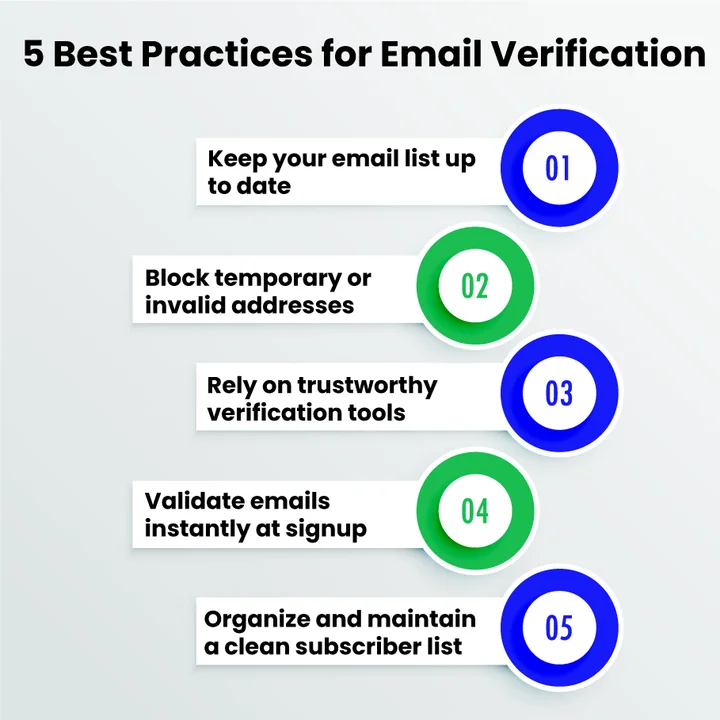
- Schedule Regular Verification: Periodically check your list to remove invalid, bounced, or risky addresses. Recurring verification prevents degradation over time.
- Segment and Suppress Low-Engagement Subscribers: Instead of immediately deleting inactive users, suppress them from campaigns while tracking re-engagement opportunities. This keeps your data clean without losing potential leads.
- Monitor for Disposable, Role-Based, or High-Risk Emails: Continuously flag temporary or role-based addresses to prevent bounces and spam complaints.
- Integrate Real-Time Verification for New Entries: Ensure new signups are validated immediately to prevent invalid addresses from being added to your list.
- Review Engagement Metrics: Use open rates, click-throughs, and bounce data to identify patterns, adjust campaigns, and maintain a healthy list over time.
Your email list stays accurate, dependable, and optimized for deliverability and engagement by concentrating on continuous operations rather than one-time setup.
How Can Email Verification Improve Deliverability?
Email deliverability ensures your emails reach subscribers’ inboxes instead of spam folders. Using proper email verification is essential to achieving this consistently.
1. Reduce Bounces
Invalid or inactive addresses cause hard bounces, which harm your sender’s reputation. Verifying your list removes these risky emails, keeping bounce rates low and ensuring messages reach real subscribers.
Example: A campaign of 15,000 emails saw 2,000 bounces. After verification, only 13,000 valid addresses remained, nearly eliminating bounces.
ESP Insight: Email Service Providers (ESPs) like Gmail, Yahoo, and Outlook monitor bounce rates closely. Exceeding their thresholds can trigger temporary or permanent sending restrictions. Proper verification helps you stay below these limits.
2. Protect Sender Reputation
Verified lists show email providers that your messages reach genuine, active subscribers. Maintaining a clean list increases credibility and improves inbox placement for future campaigns.
3. Improve Engagement Rates
Emails sent to interested subscribers see higher open and click-through rates. Verification ensures your messages reach the right audience, boosting overall engagement.
Example: After verification, an e-commerce brand’s click-through rate rose from 10% to 16%.
4. Support Long-Term Marketing Success
Regular verification, bulk email verification, and real-time signup checks keep your list accurate, active, and ready for campaigns, minimizing spam traps and maintaining ROI.
Practical Tip: Use advanced tools to detect disposable, role-based, or risky emails. This saves time, protects reputation, and ensures campaigns consistently perform well.
How Can Advanced Tools and Techniques Improve Email List Verification?
Email list verification has become more efficient and accurate thanks to advanced tools and modern techniques. These solutions go beyond basic syntax checks, helping marketers maintain a high-quality list while protecting sender reputation and improving deliverability.
Using advanced tools and techniques ensures your email verification process is faster, safer, and more reliable, especially for large or constantly growing email lists.
Maintaining a clean email list ensures your campaigns consistently reach real subscribers and reduces bounce rates.
Specific Ways Advanced Tools And Techniques Help:
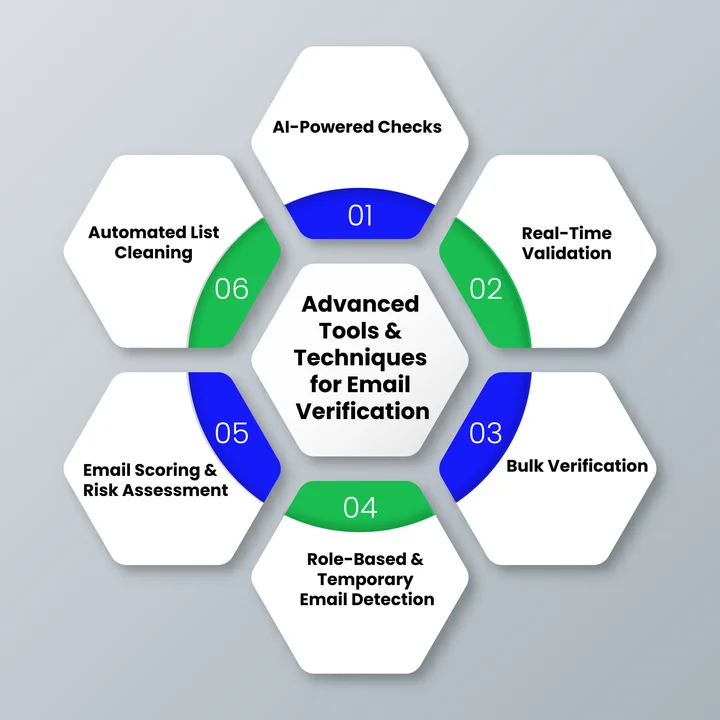
- AI-Powered Verification: Identifies risky or inactive emails, allowing you to focus on contacts that matter most.
- Real-Time Validation: Checks emails during signup to prevent invalid addresses from entering your list
- Bulk Verification with Accuracy Controls: Validates large lists efficiently while minimizing false positives.
- Detection of Role-Based and Disposable Emails: Flags addresses that may reduce deliverability so you can take targeted action.
- Automated List Cleaning and Prioritization: Regularly removes low-quality emails and assigns quality scores, helping you prioritize high-value contacts.
Marketers can improve the success of email campaigns by using these cutting-edge strategies to maintain a clean, verified email list, lower bounce rates, increase engagement, and protect their sender reputation.
Frequently Asked Questions (FAQs)
2. Can You Verify Your Email List Without Losing Subscribers?
Yes, you can. The verification process, when done correctly, does not remove valid or active subscribers. To ensure minimal disruption:
- Start with small segments before processing your entire list
- Use reputable tools like EmailVerify for accurate results
- Regularly clean your list rather than performing one-time massive deletions
3. How Often Should You Verify Your Email List?
It depends on the size and activity of your list. Generally:
- Monthly verification is recommended for high-traffic lists
- Quarterly checks work well for smaller or more static lists
- Real-time verification at signup helps maintain ongoing list quality
Regular verification prevents bounces, protects sender reputation, and keeps engagement rates high.
4. Will Verifying Emails Affect Your Sender Reputation?
No, proper verification actually protects your sender's reputation. When you carefully remove invalid or risky emails, email providers see that you maintain a clean list, which improves deliverability. Avoid abrupt mass deletions or the use of unreliable verification tools, as these can cause temporary spikes in bounce rates.
5. Are There Any Risks in Using Real-Time Email Verification?
Real-time verification is safe and helps keep your email list clean. Risks only appear if you use unreliable tools or poorly manage your list. Using trusted tools and combining real-time verification with periodic bulk checks ensures long-term accuracy and protects your sender reputation.
6. Can Email Verification Improve Engagement Rates On Campaigns?
Yes, verified email lists often lead to higher engagement. When emails reach real, interested subscribers:
- Open rates increase
- Click-through rates improve
- Spam complaints decrease
Consequently, your campaigns become more effective, and ROI improves over time.
7. Is Email Verification Compliant With Privacy Regulations?
Yes, reputable email verification solutions, like EmailVerify, comply with major privacy regulations (GDPR, CCPA, etc.). They validate emails without storing or exposing sensitive personal data and provide secure handling of subscriber information. Always choose tools that offer clear privacy policies and data protection measures.
Conclusion: How to Maintain a High-Quality Email List for Better Deliverability
Maintaining a high-quality email list goes beyond simply removing invalid addresses; it directly impacts deliverability, engagement, and your overall campaign success.
Regular verification, combining bulk checks with real-time validation, ensures your emails reach active, interested subscribers while protecting your sender reputation. Using reliable tools, monitoring for disposable or risky addresses and segmenting your list strategically all contribute to smoother, more effective email campaigns.
But how can you make sure your efforts translate into measurable results? Focus on these key actions:
- Keep your email list clean with regular checks and bulk verification.
- Implement real-time validation during signups to prevent invalid addresses from being added to your list.
- Monitor engagement and remove inactive subscribers to maintain high deliverability.
The key takeaway is that a verified, organized, and actively maintained email list builds a strong foundation for consistent campaign success. Integrating these practices reduces bounce rates, improves engagement, and maximizes ROI.
Taking these steps now ensures your future campaigns reach the right audience, generate meaningful results, and strengthen long-term relationships with your subscribers.
Maximize ROI, boost engagement, and maintain strong inbox placement with a verified email list.


